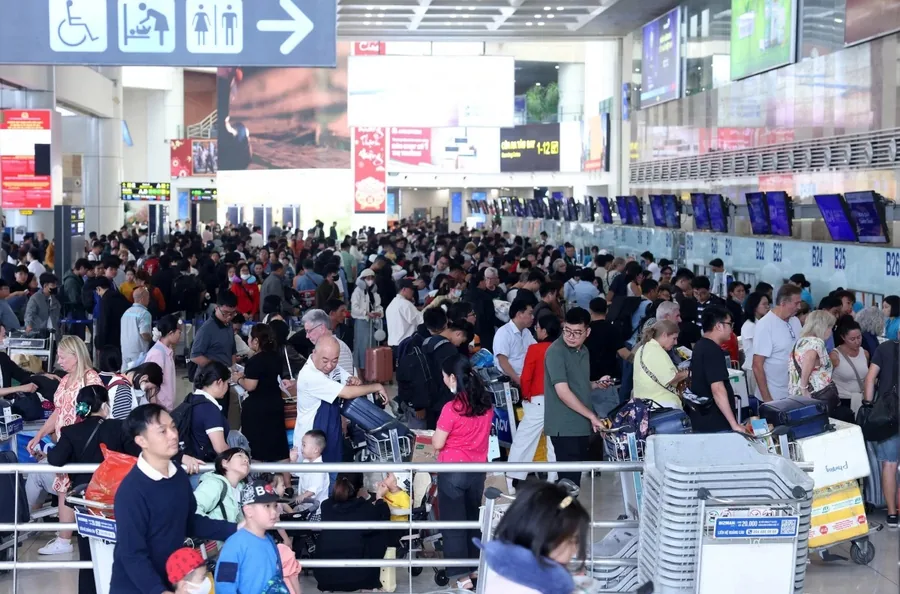
Phu Quoc International Airport is the principal international aviation gateway for Phu Quoc and the most important air-access asset in the island economy. The airport is already operating, while a major expansion programme is under construction ahead of APEC 2027. Current works include a new 3,300-metre second runway, a new international Terminal 2, expanded aprons and a VIP terminal. The expansion is intended to lift the airport far beyond its existing four-million-passenger terminal capacity and strengthen Phu Quoc's position as an international tourism and events destination.
PQC · Phu Quoc
Overview
Understand the airport as a journey, a gateway and a regional transport system.
Phu Quoc International Airport opened in 2012 and transformed air access to Vietnam's largest island. The current operating system is a code 4E airport with an existing 3,000 m × 45 m runway and a passenger terminal that was expanded in 2018 to about 36,167 m² and approximately 4 million passengers per year. The airport is now in a second major transformation tied to APEC 2027 and the island's longer-term tourism growth. By mid-2026, work was advancing on a new 3,300 m × 45 m second runway, a new international Terminal 2, enlarged aircraft parking areas and a VIP terminal. Local-government reporting in 2026 described the new runway as substantially complete and entering flight-calibration preparation, while Terminal 2 and its apron were under active construction. The investment programme is intended to create a much larger two-runway airport capable of handling more widebody aircraft, heavier peak-hour demand and significantly greater international traffic. Because the airport is changing quickly, operating infrastructure, construction-stage assets and long-term capacity targets must be kept clearly separate.
Key things to understand
Phu Quoc International Airport is already operating while a much larger airport system is being built around it.
The existing passenger terminal was expanded to approximately 4 million passengers per year and about 36,167 m².
A new second runway measuring 3,300 m × 45 m reached flight-calibration readiness in 2026.
The airport expansion includes a new international Terminal 2, expanded apron capacity and a VIP terminal.
APEC 2027 is accelerating airport, road, conference, utilities and urban infrastructure across Phu Quoc.
Current and future airport capacity figures must not be mixed: the existing terminal, the under-construction expansion and long-term planning represent different stages.
The airport's strongest economic role is passenger tourism, international access and high-value island connectivity rather than large-scale industrial cargo.
Phu Quoc's island geography makes aviation unusually important compared with many mainland destinations.
Widebody capability is strategically important for international tourism and large event traffic.
Routes, frequencies and terminal assignments remain time-sensitive while the expansion programme progresses.
Why it matters
Read the airport as a system, not just a terminal
Strategic role
Phu Quoc's island economy depends on fast, high-capacity access, making the airport one of the most economically important pieces of tourism infrastructure in Vietnam.
What makes it distinctive
Few Vietnamese airports are as directly tied to one destination's tourism performance. The current expansion is turning a relatively compact island airport into a much larger international gateway.
What users often miss
Three different airport realities coexist in 2026: the operating T1 and runway, the APEC-driven construction programme, and longer-term capacity planning. Mixing them produces misleading claims.
In one sentence
Phu Quoc is an operating international island airport that is rapidly expanding into a two-runway, larger-terminal gateway ahead of APEC 2027.
Airport identity
What role does this airport actually play?
Role
Primary international aviation gateway for Phu Quoc and the island tourism economy.
Passenger Role
Supports domestic tourism, direct international arrivals, business travel and large-scale events.
Cargo Role
Supports island logistics and selected time-sensitive goods, although passenger aviation remains the airport's dominant economic role.
Economic Role
Critical infrastructure for resorts, hospitality, entertainment, real estate, events and international visitor growth.
Strategic Role
The principal airport in the Gulf-island tourism system of An Giang and a core APEC 2027 infrastructure asset.
Core Insight
Phu Quoc Airport is evolving from a tourism-focused island gateway into a much larger two-runway international airport designed for higher peak demand and stronger global connectivity.
Airport essentials
Navigate the terminals without guesswork
Terminals
T1 / existing terminal
Terminal 1
Current operating passenger terminal
●
Use this terminal for
Domestic and international passenger processing under the current operating configuration
Connection
The existing terminal combines domestic and international functions while the new T2 is being built.
Capacity
Approximately 4 million passengers/year after the 2018 expansion
Expanded area
Approximately 36,167 m²
T1 remains the current passenger-processing core during the expansion programme.
T2 / under construction
Terminal 2
Future international passenger terminal
●
Use this terminal for
Planned international passenger operations
Connection
Designed to work with the enlarged apron and two-runway airport system.
Capacity
Large new international-terminal capacity under the APEC 2027 expansion programme
T2 is under construction in 2026 and should not be represented as fully operational until commissioned.
VIP
VIP Terminal
Dedicated VIP and event-support terminal
●
Use this terminal for
High-level delegations, official movements and premium aviation functions
Connection
Part of the accelerated APEC 2027 programme.
Construction status is time-sensitive and should be updated from current official project reporting.
Passenger journey
From check-in to the city — follow the flow
Arrival and departure flow
Current Departure
Confirm flight, airline and current terminal instructions.
Complete check-in and baggage drop.
Pass aviation security.
Complete immigration for international departures where applicable.
Proceed to the assigned departure gate.
Current Arrival
Disembark
Immigration for international arrivals where applicable
Baggage reclaim
Customs where applicable
Public arrivals area
Taxi, ride-hailing, hotel transfer or other island transport
Expansion Context
Passenger flows may change materially when T2 enters operation and functions are redistributed across the airport.
Editorial Rule
Do not publish future T2 passenger-processing arrangements as current practice before commissioning.
Transfer strategy
Current domestic journeyT1
Use the current terminal and follow live airline instructions.
Current international journeyT1
Complete immigration and customs procedures applicable to the itinerary.
Future T1 ↔ T2 connectionTwo-terminal system
Transfer procedures will depend on the final operating allocation after T2 commissioning.
Getting connected
Reach the city, the region and the wider air network
Surface access
Duong To
The airport is located in the Duong To area, south of the main Dương Đông urban centre.
Duong Dong
Road connections provide relatively direct access between the airport and Dương Đông.
South Island
The airport also connects efficiently toward An Thoi and major southern resort and entertainment areas.
North Island
Journeys to northern resorts and attractions require longer island road transfers.
Apec Roads
Road and urban infrastructure around the island is being upgraded as part of APEC 2027 preparations.
Planning Rule
Actual journey time varies by resort location, traffic, weather and construction activity.
Air connectivity
Domestic Role
Strong domestic connectivity links Phu Quoc with Vietnam's major urban and tourism markets.
International Role
Direct international services are a major part of Phu Quoc's tourism strategy.
Tourism Catchment
The airport is the dominant air gateway for the entire island rather than for one city district.
Future Role
Expanded runway, terminal and apron capacity is intended to support substantially more international traffic and widebody operations.
Network Rule
Specific airlines, routes and frequencies are dynamic and should be sourced from current airline or airport information.
At the airport
Services, accessibility and practical preparation
Passenger services
Current Terminal
T1 provides check-in, baggage handling, security, immigration and customs processing, food, retail and passenger waiting areas.
Boarding
The 2018 terminal expansion increased gate and boarding capacity and added passenger boarding bridges.
Commercial Services
Retail, food and tourism-oriented passenger services operate within the current terminal.
Future Services
The new terminal programme is expected to create a larger service ecosystem for international passengers and high-level events.
Planning Note
Do not describe future T2 commercial services as currently available.
Accessibility
Terminal Environment
The current terminal uses a two-level passenger arrangement with separated arrival and departure flows.
Assistance
Passengers needing mobility or boarding assistance should coordinate with the airline before travel.
Future Infrastructure
New terminal and VIP facilities are expected to use modern passenger-circulation systems.
Editorial Rule
Accessibility claims should remain tied to verified operating facilities.
Family travel
Advantages
Airport is located directly on the island, avoiding ferry transfers after arrival.
Strong resort-transfer market makes pre-arranged transport widely available.
Current terminal layout is relatively compact compared with major continental hubs.
Planning
Confirm resort transfer distance before booking.
Allow extra time during holiday peaks and major events.
Check airline stroller, infant and baggage policies.
Monitor airport construction updates during the expansion period.
Before you travel
Confirm current flight and terminal information before leaving your hotel or resort.
Allow additional time during holidays, large events and APEC-related construction periods.
Pre-arrange resort transfers when travelling to distant northern or southern parts of the island.
Do not assume the new T2 is operating until officially commissioned.
Treat route and airline information as dynamic.
During heavy rain or storms, check both flight status and island road conditions.
Operating conditions
Plan for peaks, weather and disruption
Peak periods
Dry Season
Phu Quoc's dry season brings strong domestic and international leisure demand.
Holidays
Tet, national holidays and school-break periods can create sharp passenger peaks.
Event Traffic
APEC 2027 preparations and future large events increase the importance of peak-hour capacity.
International Banks
International charter and scheduled waves can create concentrated immigration, baggage and surface-transport demand.
Planning Advice
Use online check-in where available.
Allow additional processing time in peak periods.
Confirm hotel or resort transfer arrangements in advance.
Weather and disruption
Wet Season
Heavy rain and tropical weather can affect both flight operations and island roads.
Thunderstorms
Convective weather can disrupt aircraft sequencing and ramp operations.
Regional Weather
Weather elsewhere in the airline network may affect Phu Quoc flights even when local conditions are acceptable.
Island Effect
Because Phu Quoc is an island, flight disruption can have a larger impact on visitor movement than at destinations with multiple fast overland alternatives.
Passenger Rule
Check airline status and local weather when severe conditions are forecast.
Security and processing
Current International Processing
T1 supports immigration, customs and international passenger screening.
Aviation Security
Passenger and baggage security screening operates as part of normal airport procedures.
Future Expansion
New T2 and VIP facilities will require updated security, border-control and passenger-processing arrangements.
Calibration
New runway systems require flight calibration and certification before normal operating use.
Editorial Rule
Construction completion and flight-calibration readiness are not the same as full commercial commissioning.
Airport intelligence
Capacity, growth and the airport's next chapter
Recent capacity development
Existing Terminal
Approximately 4 million passengers/year after the 2018 T1 expansion.
Existing Runway
Runway 1 is approximately 3,000 m × 45 m.
New Runway
Runway 2 is approximately 3,300 m × 45 m and reached calibration-readiness milestones in 2026.
Terminal Expansion
A new international T2 is under construction.
Apron Expansion
Additional aircraft parking is being built to support much higher peak demand.
Vip Terminal
A dedicated VIP terminal is part of the APEC 2027 programme.
Status Rule
Capacity figures tied to future infrastructure must remain clearly labelled as under construction, planned or target capacity.
Current operations
Status
Operating international airport with major expansion construction in progress.
Current Terminal
T1 is the principal operating passenger terminal.
Current Runway
The existing 3,000 m runway remains part of the active airport system.
Runway2 Status
The new 3,300 m runway reached flight-calibration preparation in 2026.
Construction Context
T2, T2 apron and VIP facilities are being advanced on an accelerated APEC 2027 schedule.
Long-term airport planning
Airport Class
ICAO code 4E.
2025 Approved Planning
The April 2025 airport plan retained T1 at about 4 million passengers/year and planned a T2 of about 6 million passengers/year, with about 18 million passengers/year in the 2050 vision.
2026 Expansion Programme
APEC-driven development in 2026 is materially more ambitious than the earlier 2025 planning baseline and includes a second runway, a much larger international T2, expanded aprons and VIP facilities.
Long Term Direction
Phu Quoc is being positioned as a much larger international tourism and event gateway.
Interpretation
Where later project approvals or implementation decisions supersede earlier planning assumptions, reader-facing content should prioritize the latest legally effective and actually implemented framework.
Cargo and investment
See the airport as part of its regional economic network
Cargo gateway
Role
Supports island supplies, selected perishables, express shipments and belly cargo on passenger services.
Tourism Orientation
Passenger aviation remains more important economically than dedicated cargo at Phu Quoc.
Future Potential
Greater aircraft and apron capacity can improve belly-cargo and time-sensitive logistics options.
Island Context
Cargo planning should be assessed together with maritime ferry and port connections to the mainland.
Strong Use Cases
Express shipments
Tourism and hospitality supplies
High-value perishables
E-commerce parcels
Belly cargo on international flights
Regional investment impact
Tourism
Airport capacity directly influences resort occupancy, international visitor growth and destination competitiveness.
Events
Expanded aviation infrastructure is central to Phu Quoc's ability to host APEC 2027 and future large-scale international events.
Hospitality
Direct international air access supports luxury resorts, hotels, entertainment and conference investment.
Real Estate And Services
Improved accessibility can reinforce commercial and service development across the island.
Investment Caution
Airport-led growth should be assessed together with island utilities, roads, water, environmental capacity and seasonality.
Economic reach
Industrial catchment
01
Dương Đông–central Phu Quoc
Urban services, hotels, commerce and tourism
Fast access to the island's principal urban and commercial centre.02
South Phu Quoc–An Thoi
Resorts, entertainment, cruise and tourism services
Strong road access supports high-volume leisure and event traffic.03
North Phu Quoc resort corridor
Large integrated resorts, entertainment and luxury hospitality
International air connectivity is fundamental despite longer ground-transfer distances.04
Island-wide tourism economy
Hospitality, food, attractions, mobility and visitor services
The airport is the core high-speed gateway linking the island to domestic and international markets.
Investor checklist
Separate existing airport capacity from under-construction APEC 2027 expansion capacity.
Track the actual commissioning date and operating allocation of T2.
Assess resort or project travel time from the airport rather than relying only on island distance.
Model tourism seasonality and international route dependence.
Evaluate airport expansion together with road, water, power and environmental infrastructure.
Use the latest legally effective airport approvals when comparing long-term capacity scenarios.
Business and investment
Use the airport as a regional decision-making lens
Business travel
Strengths
Direct access to a major tourism and hospitality market
International-flight potential
Fast access to conference, resort and event facilities
Expansion tailored partly to APEC 2027 requirements
Limitations
Island location creates dependence on aviation and maritime links
Peak tourism seasons can produce strong capacity pressure
Construction can temporarily affect access and passenger experience
Decision Rule
For meetings or events, select flights based on schedule reliability, resort location and ground-transfer time.
Air vs road vs rail vs sea
Air
Fastest and most important mode for long-distance domestic and international visitor access.
Sea
Ferries from Ha Tien and Rach Gia provide important alternatives for mainland–island passenger and vehicle movement.
Road
Road transport is essential after arrival for resort, attraction and urban access.
Rail
There is no direct rail access to Phu Quoc because it is an island.
Decision Rule
Air travel dominates long-distance access, while ferries remain important for travelers, vehicles and mainland connectivity.
Know before you assume
Common airport misconceptions
The new T2 is not yet the current operating international terminal simply because construction is advanced.
The new 3,300-metre runway reaching calibration readiness does not automatically mean full commercial use has begun.
The existing airport is already international and operational; the current project is a major expansion rather than construction of an entirely new airport.
Earlier 2025 planning figures and the more ambitious APEC-driven 2026 expansion programme should not be treated as the same capacity scenario.
Phu Quoc Airport's strategic value is primarily tourism, events and island connectivity rather than heavy industrial cargo.
Airport evolution
How the gateway has changed
Phu Quoc develops an earlier local airfield
The island is served by a smaller airport near Dương Đông before the modern international airport is built.
Modern Phu Quoc International Airport opens
The new airport enters service with a 3,000-metre runway and modern passenger terminal, transforming island accessibility.
Existing passenger terminal is expanded
Terminal area increases to about 36,167 m² and design capacity rises from approximately 2.65 million to 4 million passengers per year.
Airport planning for 2021–2030 and 2050 is approved
Decision 427/QD-BXD sets a formal planning framework including T1, a future T2 and long-term airport expansion.
APEC 2027 expansion programme accelerates
Major airport and island infrastructure projects move into accelerated implementation.
Second runway, T2, apron and VIP terminal advance
Construction progresses rapidly across the main airport-expansion packages.
Runway 2 reaches calibration-readiness milestone
The new 3,300-metre runway is prepared for flight-calibration activities before commissioning.
APEC summit becomes a major operational test
The expanded airport is intended to support the exceptional passenger, delegation and aircraft demand associated with APEC 2027.