Airport guide

Da Nang International Airport

Da Nang International Airport is the primary aviation gateway for Da Nang and one of Central Vietnam's most important transport assets. Located unusually close to the urban core, it combines fast city access with separate domestic and international passenger terminals. The airport handled more than 13.4 million passengers in 2024, while international Terminal 2 alone handled about 6.81 million passengers in 2025. A major expansion programme is now under way, including expansion of T2 from its original 4 million-passenger design capacity toward 6 million passengers per year and planned expansion of T1, within a 2026-approved airport planning framework targeting about 20 million passengers per year.

DAD · Da Nang
Overview

Understand the airport as a journey, a gateway and a regional transport system.

Da Nang International Airport is a dual civil-military airport embedded in the urban fabric of Da Nang and functions as the principal air gateway to the city's beaches, business districts and wider Central Vietnam visitor economy. Terminal 1 serves domestic passengers and Terminal 2 serves international passengers. The airport's location gives it a distinctive advantage: central Da Nang can be reached far more quickly than from many large metropolitan airports, although road conditions and peak travel periods still matter. Demand has already moved beyond the original terminal design assumptions. ACV reported 13,425,154 passengers in 2024 across the airport, while Terminal 2 handled 6,811,448 international passengers in 2025 against an original design capacity of 4 million. In May 2026, AHT began a nearly VND 1.5 trillion expansion of T2 to raise its design capacity to 6 million passengers annually. The Ministry of Construction's Decision 222/QD-BXD, approved in February 2026, establishes a 2021–2030 planning framework of ICAO code 4E, about 20 million passengers per year and 100,000 tonnes of cargo per year, while retaining two existing runways and planning expanded aircraft parking and supporting infrastructure. The airport should therefore be understood as both a highly convenient passenger gateway and a capacity-constrained urban aviation system undergoing phased modernization.

Key things to understand

  • Use T1 for domestic flights and T2 for international flights, but always reconfirm the terminal with the airline before travel.
  • The airport is unusually close to central Da Nang, making short urban transfers one of its strongest passenger advantages.
  • Terminal 2 is operating under heavy demand and is being expanded from an original 4 million-passenger design capacity toward 6 million passengers per year.
  • T2 retained the Skytrax 5-Star Airport Terminal rating in 2026 for the third consecutive year.
  • The airport is the primary aviation gateway for the wider post-2025 Da Nang municipality, including Hoi An and My Son.
  • Chu Lai Airport is the enlarged municipality's second aviation gateway and serves a different southern catchment.
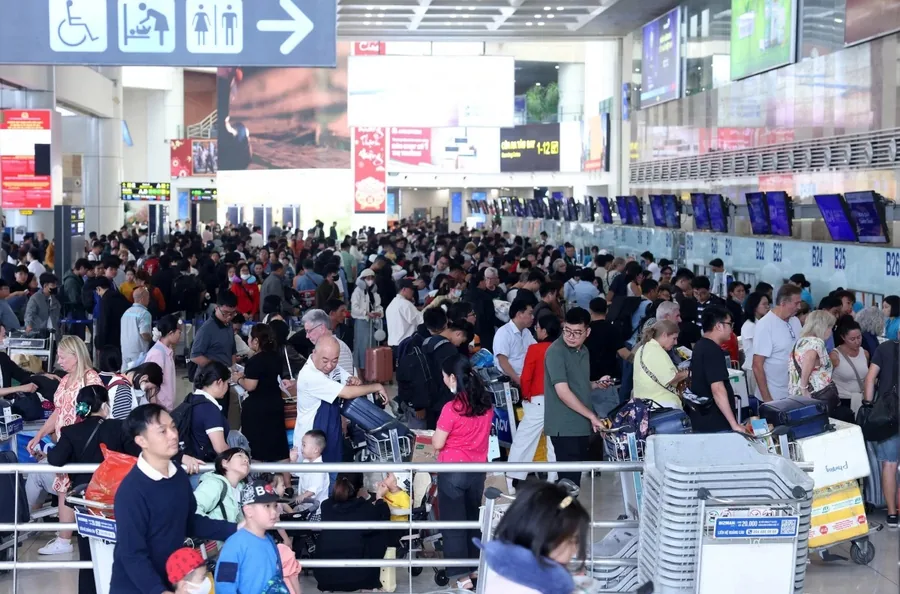
  • Peak holiday, summer and event periods can create terminal and road congestion even though the airport is geographically close to the city.
  • The 2026 airport plan retains two existing runways and plans additional taxiway, apron and terminal capacity rather than treating terminal expansion as the only constraint.
  • Airport and airline network data should be treated dynamically because routes and frequencies change.
  • For regional planning, Da Nang International Airport should be assessed together with Chu Lai, road, rail and port connectivity.
Why it matters

Read the airport as a system, not just a terminal

Strategic role

Da Nang International Airport turns the city into one of Vietnam's easiest major destinations to reach by air and directly supports the visitor, service and investment economy of Central Vietnam.

What makes it distinctive

Its combination of major international-gateway functions and exceptional proximity to the urban core is unusual. Passengers can move from aircraft to city far more directly than at many large metropolitan airports.

What users often miss

Convenience can hide capacity pressure. T2 has handled passenger volumes well above its original design capacity, while future growth requires coordinated terminal, apron, taxiway and surface-access investment.

In one sentence

It is Central Vietnam's main urban airport—close to downtown, split between domestic T1 and international T2, and now expanding for the next phase of growth.

Airport identity

What role does this airport actually play?

Role
Primary international and domestic aviation gateway for Da Nang and a major Central Vietnam airport.
Passenger Role
Supports domestic trunk travel, international tourism, business travel and regional touring.
Cargo Role
Supports air cargo and time-sensitive logistics within a wider multimodal system of airports, ports, road and rail.
Economic Role
A critical access asset for tourism, hospitality, services, investment, technology and trade.
Strategic Role
The northern and central aviation anchor of the enlarged post-2025 Da Nang municipality, complemented by Chu Lai Airport in the south.
Core Insight
Da Nang International Airport's defining advantage is exceptional urban proximity; its defining challenge is fitting rising passenger demand and future capacity into a constrained urban and dual-use airport site.
Airport essentials

Navigate the terminals without guesswork

Terminals

T1

Terminal 1

Domestic passenger terminal

Use this terminal for
Domestic arrivals and departures
Connection
Domestic terminal; use T2 for international flights.
Capacity
Public Da Nang investment material has cited approximately 6 million passengers/year as the terminal's design capacity.
Expansion figures describe project planning and should not be presented as current operating capacity until completed.
T2

Terminal 2

International passenger terminal

Use this terminal for
International arrivals and departures
Connection
International terminal; use T1 for domestic flights.
Capacity
4 million passengers/year
The expansion is under implementation; the 6 million-passenger figure is the target design capacity after completion.
Passenger journey

From check-in to the city — follow the flow

Arrival and departure flow

Domestic Departure
  • Confirm T1 and airline details.
  • Complete check-in and baggage drop.
  • Pass aviation security.
  • Proceed to the assigned gate.
International Departure
  • Confirm T2.
  • Complete airline check-in and baggage drop.
  • Complete outbound immigration where applicable.
  • Pass security screening.
  • Proceed to the assigned gate.
International Arrival
  • Immigration
  • Baggage reclaim
  • Customs
  • Public arrivals hall
  • Surface transport
Transfer Rule
Domestic–international transfers require movement between T1 and T2 and may involve baggage, security and immigration procedures.
Editorial Rule
Do not publish a universal minimum connection time without current airline and itinerary verification.

Transfer strategy

Domestic → InternationalT1 → T2

Allow time for terminal movement, baggage requirements, immigration and security.

International → DomesticT2 → T1

Arrival formalities and baggage procedures can materially affect the connection.

Same-terminal journeyT1 or T2

Follow the airline's current transfer and check-in instructions rather than assuming a universal process.

Getting connected

Reach the city, the region and the wider air network

Surface access

Central Da Nang
The airport is embedded in the urban area and is only a short geographic distance from central business, hotel and riverfront districts.
Main Road Context
Urban access uses the surrounding Da Nang street network, including approaches through Nguyen Van Linh and Duy Tan corridors.
Taxi
Licensed taxis serve the passenger terminals.
Ride Hailing
App-based transport is widely used; pickup arrangements should be checked at the time of travel.
Bus
Public transport options may serve the airport and surrounding urban area; route numbers and schedules should remain dynamic.
Private Transfer
Common for resorts, hotels, business travelers, families and onward travel toward Hoi An.
Planning Rule
Do not convert the airport's short physical distance to downtown into a guaranteed travel time.

Air connectivity

Domestic
  • Ha Noi
  • Ho Chi Minh City
  • Northern Vietnam
  • Central Highlands
  • Southern Vietnam
  • Major domestic tourism markets
International Regions
  • Northeast Asia
  • Southeast Asia
  • Selected South Asian markets
  • Connecting regional networks
Gateway Geography
The airport supports Da Nang's urban core and coastal tourism while also acting as a practical gateway for Hoi An, My Son and broader Central Vietnam journeys.
Network Trend
International demand is strong enough that T2 has operated well above its original design capacity.
Data Rule
Airlines, routes and frequencies are dynamic and should be sourced from current airport or airline information.
At the airport

Services, accessibility and practical preparation

Passenger services

Information
Passenger and flight-information services operate in the terminals.
Wifi
Airport Wi-Fi is available; connection methods can change.
Lounges
Airline and commercial lounge access depends on terminal and eligibility.
Food
Food and beverage services operate in passenger areas.
Shopping
Retail and duty-free services are available, particularly in T2.
Medical
Airport medical and emergency support forms part of airport operations.
International Terminal Experience
T2 emphasizes passenger service, local identity and digital experience and retained a Skytrax 5-Star terminal rating in 2026.

Accessibility

Terminal Environment
Passenger terminals use managed circulation, lifts and escalators.
Airline Assistance
Passengers requiring wheelchair or boarding assistance should coordinate with the airline.
Terminal Transfer
Passengers transferring between T1 and T2 should allow additional time and confirm the current transfer arrangement.
Editorial Rule
Do not claim universal accessibility for every gate, airline or journey without current verification.

Family travel

Planning
  • Confirm the terminal.
  • Keep passports and boarding documents organized.
  • Allow extra time during holiday peaks.
  • Check airline stroller and infant rules.
  • Plan food, water and restroom stops before boarding.
Advantage
The airport's proximity to central Da Nang can make family transfers comparatively convenient.
Peak Risk
Summer and holiday traffic can substantially increase processing pressure.

Before you travel

  • Confirm whether your flight uses T1 or T2.
  • Check live flight status before leaving for the airport.
  • Allow additional time during holidays, summer peaks and severe weather.
  • Verify airline baggage, check-in and transfer requirements.
  • Treat construction and terminal-development information as time-sensitive.
Operating conditions

Plan for peaks, weather and disruption

Peak periods

Summer
Strong beach, family and domestic leisure demand.
Public Holidays
National holidays can produce concentrated passenger surges.
Major Events
Large tourism, MICE and city events can increase demand.
International Peaks
International departure and arrival banks can place significant pressure on T2.
Planning Advice
  • Check flight status.
  • Confirm T1 or T2.
  • Use online check-in where eligible.
  • Allow additional processing time during peaks.
  • Monitor airport and airline notices.

Weather and disruption

Typhoons
Central Vietnam is exposed to tropical storms and typhoons that can affect airport operations and regional transport.
Heavy Rain
Heavy seasonal rainfall can disrupt flights and surface access.
Thunderstorms
Convective weather can affect ramp activity and flight sequencing.
Regional Weather
Weather at origin or destination airports can disrupt the network even when conditions in Da Nang are acceptable.
Passenger Rule
During severe weather, check airline flight status and official airport notices before travelling.

Security and processing

Check In
Use airline counters or supported self-service options.
Security
All passengers complete aviation-security screening according to itinerary and terminal.
Immigration
International passengers use immigration controls at T2 according to applicable requirements.
Customs
International baggage and goods remain subject to Vietnamese customs requirements.
Digital Direction
Passenger processing is becoming more automated, but availability depends on current implementation and eligibility.
Editorial Rule
Do not imply every passenger can use every automated process.
Airport intelligence

Capacity, growth and the airport's next chapter

Recent capacity development

T2 Status
Expansion under construction after groundbreaking on 19 May 2026.
T2 Target
Raise design capacity from 4 million to 6 million international passengers/year.
T2 Investment
Nearly VND 1.5 trillion.
T1 Direction
ACV has presented a major T1 expansion concept for the 2025–2030 period.
T1 Planned Capacity
Approximately 14 million passengers/year after proposed expansion.
Airport Target
The terminal programme is intended to support an airport system of approximately 20 million passengers/year.
Editorial Rule
Clearly distinguish operating facilities from projects under construction or proposed/planned.

Current operations

2024 Airport Passengers
13,425,154 passengers across Da Nang International Airport.
2025 International Terminal Passengers
6,811,448 passengers handled by Terminal 2.
Capacity Pressure
T2 traffic has exceeded its original 4 million-passenger annual design capacity.
Current Development
T2 expansion has been under construction since 19 May 2026.

Long-term airport planning

Legal Basis
Decision 222/QD-BXD dated 12 February 2026 approving Da Nang International Airport planning for 2021–2030 with vision to 2050.
Location
Hoa Cuong and An Khe wards, Da Nang.
Airport Class
ICAO code 4E
Use
Joint civil and military airport
2030 Passenger Capacity
Approximately 20 million passengers/year
2030 Cargo Capacity
Approximately 100,000 tonnes/year
2050 Cargo Capacity
Approximately 330,000 tonnes/year
Aircraft
Planning accommodates B747, B787, A350 and equivalent aircraft.
Runways
Retain the two existing runways.
Apron Direction
Expand aircraft parking and optimize stands, with the approved planning framework indicating about 52 stands.
Interpretation
Planning figures are future capacity and infrastructure targets, not a statement that all planned works are already operational.
Cargo and investment

See the airport as part of its regional economic network

Cargo gateway

Role
Regional air-cargo gateway supporting time-sensitive goods, express shipments and belly cargo.
2030 Planning Capacity
Approximately 100,000 tonnes/year under the 2026 approved airport plan.
2050 Planning Capacity
Approximately 330,000 tonnes/year under the 2026 approved airport plan.
Strong Cargo Types
  • Express parcels
  • E-commerce shipments
  • High-value goods
  • Time-sensitive industrial components
  • Selected perishables
  • Belly cargo
Regional Context
Cargo planning should be assessed together with Chu Lai Airport, Tien Sa and Lien Chieu port systems, road corridors and the city's industrial zones.
Due Diligence
  • Current cargo handling capability
  • Airline cargo network
  • Customs and bonded services
  • Road access
  • Warehouse location
  • Future airport expansion
  • Chu Lai complementarity

Regional investment impact

Tourism
Direct international and domestic access supports Da Nang's hotels, resorts, attractions, events and visitor economy.
Business
Urban proximity makes the airport particularly useful for business travel, MICE activity and investment access.
Industry
Air connectivity supports time-sensitive movement of people, components and high-value goods across the wider regional production network.
Regional Integration
The airport complements Chu Lai Airport, seaports, rail and strategic road corridors within the enlarged Da Nang municipality.
Economic reach

Industrial catchment

01

Da Nang urban economy

Tourism, services, technology, finance and MICE

Fast passenger access and direct domestic/international connectivity.
02

Lien Chieu–northwestern Da Nang

Port, logistics and industrial development

Supports executive travel, urgent cargo and international business access.
03

Hoi An–southern tourism corridor

Heritage tourism, hospitality and visitor services

Da Nang airport remains a primary air gateway for high-volume visitor access.
04

Chu Lai industrial zone

Manufacturing, logistics and large-scale industrial activity

Da Nang complements Chu Lai Airport with broader passenger and international network connectivity.

Investor checklist

  • Compare airport access with port, rail and expressway connectivity for the target site.
  • Verify current cargo capability and airline network for time-sensitive supply chains.
  • Distinguish operating airport capacity from projects still under construction or planning.
  • Assess whether Da Nang International Airport or Chu Lai Airport better serves the project's actual catchment.
  • Account for urban road conditions and future transport infrastructure when evaluating travel time.
Business and investment

Use the airport as a regional decision-making lens

Business travel

Strengths
  • Very close to the urban core
  • Separate domestic and international terminals
  • Strong domestic trunk connectivity
  • Established Asian international network
  • Fast access to hotels and business districts
Risks
  • Peak terminal congestion
  • International T2 capacity pressure
  • Holiday and event surges
  • Weather disruption
  • Changing airline schedules
Recommendation
Verify terminal and flight status shortly before departure and preserve a traffic and processing buffer even for short city-airport journeys.

Air vs road vs rail vs sea

Air
Best suited to long-distance passenger travel, international access and selected high-value or time-sensitive cargo.
Road
Essential for first- and last-mile movement and for access to Hoi An, industrial areas and neighboring regional destinations.
Rail
Useful for intercity passenger and freight movement where speed is less critical than aviation.
Sea
Tien Sa and Lien Chieu support maritime cargo and logistics at scales that aviation does not replace.
Decision Rule
Treat the airport as one component of a multimodal network rather than as a substitute for road, rail or seaport infrastructure.
Know before you assume

Common airport misconceptions

Airport evolution

How the gateway has changed

Da Nang develops as a major Central Vietnam aviation site

The airport evolves through military and civil aviation roles into the principal air gateway of Da Nang.

Modern domestic passenger terminal era

Terminal development strengthens domestic passenger capacity and supports rapid tourism growth.

International Terminal 2 enters operation

The dedicated international passenger terminal begins service ahead of APEC 2017, separating international traffic from T1.

T2 exceeds seven million passengers

International Terminal 2 handles more than 7.1 million passengers, far above its original 4 million-passenger design capacity.

Airport handles more than 13.4 million passengers

ACV reports 13,425,154 passengers for the year, demonstrating demand beyond the original combined terminal design assumptions.

New airport planning framework approved

Decision 222/QD-BXD approves the 2021–2030 plan with vision to 2050, including code 4E and approximately 20 million passengers per year in the planning period.

T2 expansion begins

AHT breaks ground on a nearly VND 1.5 trillion expansion intended to increase T2 design capacity to 6 million passengers per year.

Phased terminal and airfield modernization

T2 expansion, proposed T1 expansion and supporting apron and airfield projects form the next stage of airport development.

Connections

Explore Vietnam's aviation network

Understand aviation

Airport terms worth knowing

A compact reference for the terminology used throughout this dashboard.

DAD

IATA airport code for Da Nang International Airport.

T1

Domestic passenger terminal.

T2

International passenger terminal.

ICAO code 4E

Airport reference classification supporting large aircraft within specified runway and aircraft-dimension criteria.

Design capacity

Planned passenger or cargo throughput level used for infrastructure design; actual traffic may exceed it.

Apron

Aircraft parking and servicing area adjacent to terminal and airfield facilities.

Sources

Where this airport guide comes from

Ministry of Construction of Vietnam

Decision 222/QD-BXD approving Da Nang International Airport planning for 2021–2030, vision to 2050

Ministry of Construction of Vietnam

Da Nang International Airport terminal development strategy 2025–2030

Da Nang International Terminal / AHT

Da Nang International Airport breaks ground on Terminal 2 expansion project

Da Nang Tourism

Da Nang International Terminal T2 retains Skytrax 5-Star rating

Airports Corporation of Vietnam

Da Nang International Airport 2024 operations and 2025 projects