Place guide

Presidential Palace Historical Area

The Presidential Palace Historical Area preserves the residential, working and landscape environment associated with Ho Chi Minh's life in the Presidential Palace compound from 1954 until 1969. It is managed as a National Special Monument and includes multiple preserved buildings, objects and garden spaces.

Ba Dinh, within the Presidential Palace compound and close to Ba Dinh Square
Overview

Understand the place through its setting, meaning and everyday use.

This canonical place represents the wider historical area administered as the President Ho Chi Minh's Vestige in the Presidential Palace Area, not merely the formal Presidential Palace building. The Ministry of Culture, Sports and Tourism states that the site's core function is to preserve the places where Ho Chi Minh lived and worked from 1954 to September 1969. The complex opened to visitors in 1975 and was ranked a National Special Monument in 2009. Visitor operations are managed separately from the neighboring Ho Chi Minh Mausoleum and can change seasonally.

Key things to understand

  • See the area as a preserved working-and-living landscape rather than one palace interior.
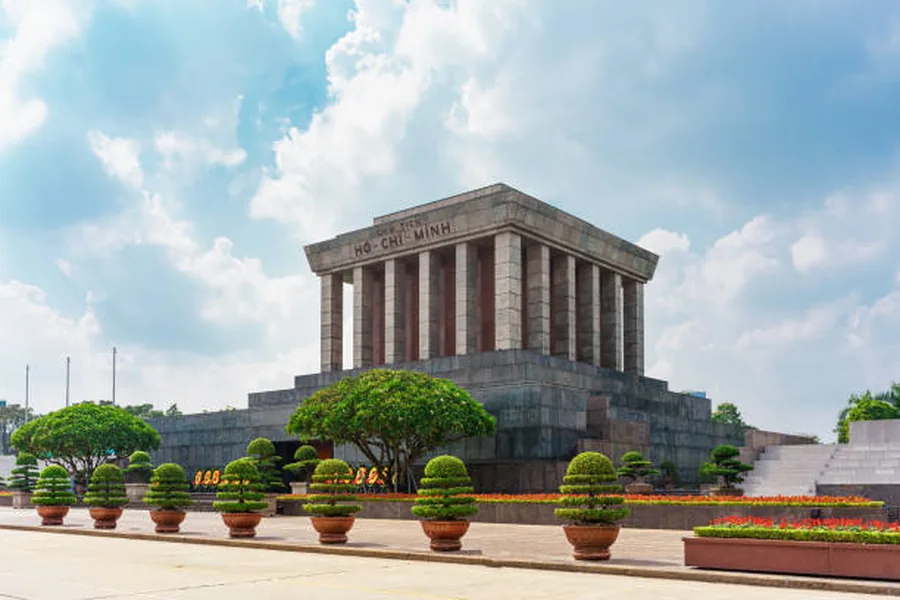
  • Distinguish the historic area from the adjacent Ho Chi Minh Mausoleum.
  • Read buildings, objects, gardens and circulation routes together as evidence of the 1954–1969 period.
  • Use the official site's current visitor information because seasonal hours and closures can change.
  • Keep interpretation tied to documented use of individual spaces rather than generic memorial language.
Place perspective

How to understand this place

Why it matters

The area preserves an unusually complete landscape of places, objects and settings associated with Ho Chi Minh's final fifteen years of work and residence.

What makes it distinctive

Its interpretation depends on the relationship among modest living spaces, working places, objects and the surrounding governmental landscape.

What visitors often miss

The canonical historical area is broader than the formal Presidential Palace building and separate from the Mausoleum.

It is the preserved Ba Dinh complex where Ho Chi Minh lived and worked from 1954 to 1969.
Place identity

Understand its role, setting and meaning

Identity
Place Type
Historic memorial complex
Core Period
Ho Chi Minh's residence and work in the compound, 1954–1969
Heritage Status
National Special Monument
Core Experience
Move through preserved places and landscape elements associated with Ho Chi Minh's daily work and life
Heritage meaning
Scope Rule
The canonical subject is the wider preserved vestige area, not just the French-colonial Presidential Palace building.
Preservation
The managing institution preserves immovable remains, original objects, documents and the landscape environment associated with the site.
Visitor History
The area opened to visitors in 1975.
Designation
It received National Special Monument status in 2009.
How to read the place

Look beyond the obvious

01

Is this the same as the Ho Chi Minh Mausoleum?

No. They are neighboring but separately managed and historically distinct visitor sites.

02

Does the profile refer only to the Presidential Palace building?

No. It represents the broader preserved historical area connected with Ho Chi Minh's residence and work.

Plan your visit

Everything you need before you go

Location
Address
1 Hoang Hoa Tham, Ba Dinh, Ha Noi, Vietnam
City
Ha Noi Municipality
Visitor information
Opening Hours
The official site publishes seasonal hours and closure periods; verify the current schedule before visiting
Admission
Verify current official arrangements
Recommended Duration
60–90 minutes
Accessibility
The visit covers an outdoor landscaped complex with controlled routes; confirm current accessibility arrangements for specific needs
Local guidance

Useful visitor tips

Check the official schedule

The managing institution publishes seasonal hours and may adjust access for ceremonies, maintenance or official requirements.

Keep sites distinct

Plan the historical area and Ho Chi Minh Mausoleum as neighboring but separate visits.

Interpretation

Common mistakes when understanding this place

01

Do not merge this complex with the Mausoleum.

02

Do not assume every building in the wider governmental compound is visitor-accessible.

03

Do not treat published seasonal hours as permanent.

Timeline

How the place reached its present form

1954

Ho Chi Minh begins living and working in the Presidential Palace area

The preserved historical period begins after the return of the central government to Ha Noi.

1969

End of the core residential period

The site's institutional mandate identifies September 1969 as the end of the period in which Ho Chi Minh lived and worked here.

1975

Area opens to visitors

The preserved site began receiving domestic and international visitors.

2009

National Special Monument status

The Prime Minister ranked the site a National Special Monument.

2025–2026

Institutional management continues under the Ministry of Culture, Sports and Tourism

The site remains a public-service institution responsible for conservation, education and visitor access.

Glossary

Useful place and heritage terms

Khu di tích Chủ tịch Hồ Chí Minh tại Phủ Chủ tịch
The official Vietnamese name of the institution and preserved historical area in the Presidential Palace compound.
Presidential Palace Area
The broader governmental and landscaped compound; the visitor vestige area is not synonymous with the palace building alone.
Connections

Continue through related places and experiences

Questions

Frequently asked questions

What period does the site primarily preserve?

The managing institution identifies the core period as Ho Chi Minh's residence and work in the Presidential Palace area from 1954 to September 1969.

When did it open to visitors?

The site opened to visitors in 1975.

Is it a National Special Monument?

Yes. The Ministry of Culture, Sports and Tourism states that it received that status in 2009.

Sources

Primary references

Ministry of Culture, Sports and TourismPresident Ho Chi Minh's Vestige in the Presidential Palace Area
Source ↗
President Ho Chi Minh's Vestige in the Presidential Palace AreaOfficial site visitor information
Source ↗
Ministry of Culture, Sports and Tourism2026 activities at the President Ho Chi Minh Vestige
Source ↗