Place guide

Ho Chi Minh Mausoleum

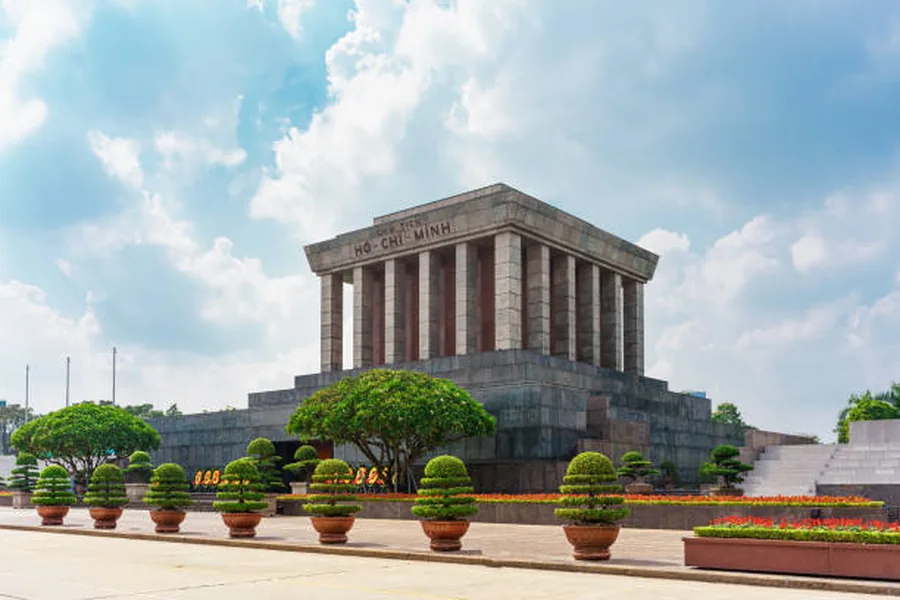
The Ho Chi Minh Mausoleum is the national memorial facing Ba Dinh Square where the preserved body of President Ho Chi Minh is kept and where Vietnamese citizens and international visitors come to pay respects.

Western edge of Ba Dinh Square in central Ha Noi
Overview

Understand the place through its setting, meaning and everyday use.

The mausoleum stands on Ba Dinh Square, the historic setting of the 2 September 1945 Declaration of Independence. Construction formally began on 2 September 1973 and the building was inaugurated on 29 August 1975, following extensive Vietnamese-Soviet cooperation. The monument is both an architectural work and the center of a highly formal memorial practice. Visitor access is governed by official schedules, security procedures, ceremonial requirements and periodic preservation work, so stable content should explain the memorial clearly without hard-coding hours that can change.

Key things to understand

  • Understand why the mausoleum stands on Ba Dinh Square, where independence was proclaimed in 1945.
  • Read the monument as a post-1969 memorial built between 1973 and 1975, not as part of the 1945 square landscape.
  • Observe the formal relationship among the mausoleum, ceremonial lawn and national flag axis.
  • Follow official security and conduct rules when entering.
  • Continue to the Presidential Palace historical area and Ho Chi Minh's Stilt House for biographical context.
  • Visit the Ho Chi Minh Museum for deeper historical interpretation.
  • Notice the monumental use of stone and strict geometry.
  • Treat the site as an active national memorial rather than a conventional tourist attraction.
Place perspective

How to understand this place

Why it matters

The mausoleum is one of Vietnam's central national memorials and a defining part of the Ba Dinh ceremonial landscape.

What makes it distinctive

Its significance combines the preservation of Ho Chi Minh's body, monumental architecture, state ceremony and a location directly tied to the 1945 independence landscape.

What visitors often miss

The mausoleum is a 1970s monument; the historic event of 2 September 1945 belongs to Ba Dinh Square before the mausoleum existed.

A national memorial inaugurated in 1975 where visitors pay respects to President Ho Chi Minh at historic Ba Dinh Square.
Place identity

Understand its role, setting and meaning

Identity
Place Type
National mausoleum and memorial
Memorial Role
Principal national site for paying respects to President Ho Chi Minh
Spatial Role
Dominant memorial landmark facing Ba Dinh Square
Visitor Character
Formal and procedure-led
Core Experience
Enter a national memorial ritual framed by the historic civic landscape of Ba Dinh
Heritage meaning
Historic Frame
Ho Chi Minh died in 1969; the decision to preserve his body and build a mausoleum led to construction beginning in 1973.
Inauguration
The mausoleum was inaugurated on 29 August 1975.
Square Context
It occupies the historic Ba Dinh landscape associated with the 1945 Declaration of Independence, but the building itself is later.
Cooperation Context
Vietnamese and Soviet specialists cooperated in preservation, design and construction.
Visitor Rule
Current visitation rules are operational information and must be checked against official management sources.
Landmark system

Read the key elements as one connected place

01

Monumental stone mass

Memorial architecture

The severe geometry and durable materials create a deliberately solemn national monument.

02

Raised central volume

Memorial chamber

The architecture organizes attention toward the interior memorial function rather than commercial or recreational use.

03

Ba Dinh frontage

Ceremonial axis

The building gains much of its meaning from facing the national ceremonial square.

Suggested routes

Build the visit around time and purpose

01

Memorial visit

Schedule and queue dependent
  1. Official visitor entry and security
  2. Queue through designated route
  3. Mausoleum interior when open
  4. Exit toward memorial complex

Best for: Paying respects and national-history context

02

Ba Dinh memorial landscape

2–4 hours
  1. Ba Dinh Square
  2. Ho Chi Minh Mausoleum
  3. Presidential Palace historical area
  4. Ho Chi Minh's Stilt House
  5. Ho Chi Minh Museum
  6. One Pillar Pagoda

Best for: Comprehensive historical visit

Plan your visit

Everything you need before you go

Visitor information
Opening Hours
Use the current official schedule published by the mausoleum management; visitation can change for preservation work, ceremonies and security
Admission
Public memorial visitation policies should be checked through official management information
Recommended Duration
Allow substantial buffer for security and queues; combine with the wider complex for several hours
Crowd Level
Can be high during public visitation periods, holidays and commemorations
Accessibility
Formal visitor routes and security procedures apply; current accessibility assistance should be checked with management
Dress Code
Respectful clothing and conduct are required
Booking
Individual arrangements depend on current official procedures; organized groups may follow separate coordination
01

From Hoan Kiem Lake

Taxi / ride-hailing / bus / walking
Typically around 10–20 minutes by vehicle

Traffic and security controls can change access points.

Timing

When to go

Official public-visitation period

Required for interior visit

Verify the current official timetable before travel.

Early arrival

Generally practical

Can reduce heat and provide more buffer for queues, subject to current operating arrangements.

Practical

Facilities and access

Security and visitor controlExtensive

Entry follows official screening and designated routes.

InterpretationAvailable in wider complex

The Ho Chi Minh Museum and Presidential Palace historical area provide broader context.

Experience

See more than the obvious

Things to do

  • Pay respects inside the mausoleum when open
  • Read the monument from Ba Dinh Square
  • Explore the wider Ho Chi Minh memorial complex
  • Compare the 1945 square history with the 1970s memorial architecture

Photography

  • Photography restrictions are strict in controlled memorial areas; follow current instructions.
  • Exterior photography from permitted public areas should respect security boundaries.
Local guidance

Useful visitor tips

Verify first

Use official management information for the current visitation schedule.

Keep periods separate

The square's 1945 independence history predates the mausoleum by decades.

Follow protocol

Security and memorial etiquette take priority over sightseeing convenience.

Interpretation

Common mistakes when understanding this place

01

Do not imply the mausoleum existed when independence was proclaimed in 1945.

02

Do not hard-code an old opening timetable as current.

03

Do not merge the mausoleum, Ba Dinh Square, Presidential Palace area and museum into one canonical place.

04

Do not describe the memorial as an ordinary museum with unrestricted photography and movement.

Timeline

How the place reached its present form

2 September 1945

Independence proclaimed at Ba Dinh Square

Ho Chi Minh reads the Declaration of Independence at the square where the mausoleum would later stand.

1969

Ho Chi Minh dies

The leadership decides to preserve his body and develop a permanent mausoleum.

2 September 1973

Construction begins

Formal construction of the mausoleum starts at Ba Dinh Square with Vietnamese-Soviet cooperation.

29 August 1975

Mausoleum inaugurated

The completed mausoleum is formally inaugurated and begins its national memorial role.

Contemporary Ha Noi

Continuing national memorial function

The site continues to receive Vietnamese and international visitors under formal preservation and security procedures.

Glossary

Useful place and heritage terms

Mausoleum
A monumental building containing a burial or memorial chamber.
Ba Dinh Square
The national ceremonial square where Ho Chi Minh proclaimed independence on 2 September 1945.
Preservation work
Specialized scientific and technical work required to maintain the memorial function and preserved body; it can affect public visitation schedules.
Connections

Continue through related places and experiences

Questions

Frequently asked questions

When was the Ho Chi Minh Mausoleum built?

Construction formally began on 2 September 1973 and the mausoleum was inaugurated on 29 August 1975.

Is the mausoleum the same as Ba Dinh Square?

No. The mausoleum is the memorial building facing the square; they are separate canonical places within one connected national-memory landscape.

Can I visit inside every day?

Do not assume so. Public visitation follows official schedules and can change for preservation work, ceremonies or security, so check the current management notice before visiting.

Sources

Primary references

Government of VietnamHo Chi Minh Mausoleum
Source ↗
Government of Vietnam1955–1975 historical chronology
Source ↗
Ho Chi Minh Mausoleum Protection CommandManagement history and government decisions
Source ↗
Ha Noi Department of Culture and SportsIntroduction: Ha Noi Capital
Source ↗