Why it mattersPhung Hung shows how Hanoi can reinterpret difficult infrastructure edges as cultural public space while keeping the city's layered transport and Old Quarter history visible.
What makes it distinctiveThe art is inseparable from a repeated railway-arch structure, so the street reads simultaneously as gallery, infrastructure, memory project and public realm.
What visitors often missThe strongest story is not any single mural but the transformation of formerly underused arch edges into a public cultural corridor.
It is a railway-arch street where public art turns memories of old Hanoi into a walkable urban experience.
Identity- Daytime
- A historic street-edge art space where railway arches, murals and Old Quarter urban fabric can be read together.
- Evening
- A calmer cultural walking space than Ta Hien, with atmosphere shaped by lighting, nearby Old Quarter activity and periodic programming rather than permanent nightlife.
- Late Night
- Not defined by a stable late-night economy; conditions depend on surrounding streets and current pedestrian or event arrangements.
- Core Insight
- Phung Hung is most valuable as adaptive urban heritage: old railway infrastructure became a public-art surface and community cultural space without losing its relationship to the working city.
Street morphology- Scale
- The best-known mural section is a compact stretch of roughly 200 metres along the eastern railway arches.
- Frontages
- One side is strongly defined by masonry railway arches and public-art interventions, while the opposite street edge remains part of the surrounding urban fabric.
- Upper Floors
- The experience is less about continuous shop-house façades than many Old Quarter streets and more about the infrastructural wall formed by the railway approach.
- Street Edge
- Pavement, art viewing, temporary cultural activity, residents, commerce and movement share limited space.
- Connections
- The street sits between the Old Quarter, Hang Luoc area and the railway approach toward Long Bien.
- Urban Lesson
- It shows how residual infrastructure space can be reused for public culture while remaining embedded in a historic transport landscape.
DayBest for reading mural detail, masonry arches and the relationship between art and infrastructure.
Best for- Public art
- Architecture
- Photography
- Urban history
Watch for: Outdoor heat, rain and normal street movement.
EveningCan feel more social when nearby pedestrian areas or events are active, but there is no fixed nightlife identity.
Best for- Walking
- Atmosphere
- Event periods
Watch for: Programming and lighting vary.
Late NightNot the canonical core of the experience.
Best for- Passing through as part of central-Hanoi activity where appropriate
Watch for: Do not assume permanent pedestrianization or late-night programming.
08:00–11:00Generally favorable for viewing mural detail and the railway-arch structure with softer visitor pressure.
Best for: Art, urban form and photography.
Trade-off: Temporary stalls or event programming may be absent.
15:30–17:30Useful transition light for murals and streetscape.
Best for: Photography and combining the street with the Old Quarter.
Trade-off: Traffic and seasonal activity vary.
Early eveningThe space can feel more social when nearby walking areas or cultural events are active.
Best for: Old Quarter walking and public-space atmosphere.
Trade-off: Lighting and programming are not uniform or guaranteed.
01Railway arches
Look for: Repeated masonry arch bays along the elevated railway approach.
They are the structural framework that gives the art space its distinctive rhythm.
02Mural-filled arch faces
Look for: Artworks integrated into formerly closed or underused arch surfaces.
They demonstrate adaptive cultural reuse without pretending the railway structure is a purpose-built gallery.
03Old Quarter edge condition
Look for: Transitions between the mural space, small streets, commerce and historic central-Hanoi fabric.
The project belongs to a wider urban heritage landscape rather than an isolated art installation.
04Infrastructure-to-public-space interface
Look for: How pavement and former service/parking edges became places to stop, view art and host activities.
The street is a case study in reclaiming overlooked urban space.
Food and drink- Signature Context
- Food and drink are secondary to art and urban heritage; nearby Old Quarter streets provide far more dining choice than the mural strip itself.
- Food Types
- Old Quarter street food nearby
- Cafes in surrounding streets
- Seasonal event stalls when programmed
- Local snacks in the wider district
- Bia Hoi
- Unlike Ta Hien, bia hoi is not the defining identity of Phung Hung Mural Street.
- Non Alcohol Options
- The visit is naturally non-alcohol-centered and works well as part of a walking route.
- Ordering Tip
- Treat temporary festival stalls as event-specific rather than permanent street attributes.
- Food Safety
- Use ordinary judgment for temporary food stalls and nearby street food.
Social culture- Low Stools
- Not a defining permanent feature of the mural space.
- Shared Space
- Art viewing, walking, local movement and periodic community programming overlap in the same narrow public realm.
- Conversation
- The murals invite intergenerational discussion because many depict remembered scenes of older Hanoi.
- International Mix
- The original project itself reflects Vietnamese–Korean cultural collaboration.
- Resident Context
- The art space remains part of a lived central-Hanoi neighborhood and transport environment.
- Respect Rule
- Public art does not turn surrounding homes, workers or everyday street life into a staged attraction.
01Adds the Old Quarter's major market and commercial layer.
Short central-Hanoi walk02Provides the strongest civic orientation point for a broader Old Quarter walk.
Walkable through the Old Quarter03Contrasts a public-art street with a time-dependent nightlife street.
Walkable within the Old Quarter - Best Light
- Morning and late afternoon usually reveal mural texture and masonry detail well.
- Daytime Subjects
- Murals and arch rhythm
- Railway masonry
- Old-Hanoi imagery
- Public-space reuse
- Street-art and passerby interaction
- Evening Subjects
- Illuminated art when available
- Festival installations
- Old Quarter transition
- Community activity
- Ethical Note
- Public space still requires respect for identifiable people, especially residents and children.
- Composition Tip
- Include the railway arches and street context so photographs explain why the art is here, rather than cropping each mural into a context-free picture.
Safety- Crowds
- Festival periods and Tet programming can make the area substantially busier.
- Traffic
- Vehicle conditions vary by section and current pedestrian arrangements; remain alert at crossings and adjoining streets.
- Alcohol
- Alcohol is not central to the experience.
- Bill Checking
- Relevant only when using nearby businesses or temporary vendors.
- Food
- Use normal judgment at temporary stalls.
- Noise
- Usually less nightlife-intensive than Ta Hien, but events can change sound levels.
- Children
- Generally suitable with normal street supervision.
- Emergency Orientation
- Use the Old Quarter street grid and larger nearby streets for orientation.
Accessibility- Street Level
- Most mural viewing occurs at street/pavement level.
- Wheelchair
- Potentially practical on suitable sections, but curb, pavement, crowd and event conditions require current verification.
- Visual Impairment
- The experience is highly visual; accompanying interpretation improves access.
- Hearing Sensitivity
- Usually manageable outside amplified events.
- Best Window
- Daytime outside major events generally provides the simplest navigation.
- Editorial Rule
- Do not claim full accessibility without current route-level verification.
Family use- Fit
- High for a short daytime or early-evening visit.
- Strengths
- Outdoor art
- Compact scale
- Visual storytelling
- Easy combination with the Old Quarter
- Challenges
- Street traffic nearby
- Weather exposure
- Crowds during events
- Uneven or obstructed pavement at times
- Best Strategy
- Choose daylight or early evening and avoid peak festival congestion if traveling with very young children.
Night experience- Identity
- Evening can add atmosphere, but Phung Hung should remain interpreted as a public-art and heritage street rather than a nightlife district.
- Elements
- Railway arches
- Murals
- Street lighting
- Nearby Old Quarter activity
- Occasional cultural programming
- Difference From Civic Promenade
- It is a linear infrastructure-edge art space rather than a broad ceremonial promenade.
- Best For
- A short cultural walk linked to the Old Quarter.
- Transport
- Pickup and drop-off should follow current local traffic and pedestrian controls.
Practical visit- Duration
- 30–60 minutes for the mural space; longer when combined with the Old Quarter or a cultural event.
- Walking
- Best experienced on foot as part of a central-Hanoi route.
- Ride Hailing
- Use a nearby legal pickup point if traffic or pedestrian controls make direct stopping difficult.
- Parking
- Do not assume dedicated parking at the mural section.
- Cash
- Useful for nearby small purchases or temporary event stalls.
- Cards
- Acceptance depends on individual nearby businesses.
- Bank Transfer
- Common locally but not a stable visitor requirement.
- Connectivity
- Central-Hanoi mobile coverage is generally strong.
- Weather
- Heat and rain affect outdoor viewing; there is no assumption of a fully sheltered gallery environment.
Etiquette- Do not touch, mark or lean equipment against murals.
- Keep railway and service access clear.
- Do not block the pavement for staged photographs.
- Ask before close portraits of residents, workers or performers.
- Treat temporary installations and festival decorations as cultural property.
- Do not climb railway structures or closed arches.
- Keep litter out of the public-art space.
- Respect event barriers and current traffic controls.
- Do not assume every arch is open to public entry.
- Remember that this is a working urban street, not a museum enclosure.
- Phung Hung Mural Street
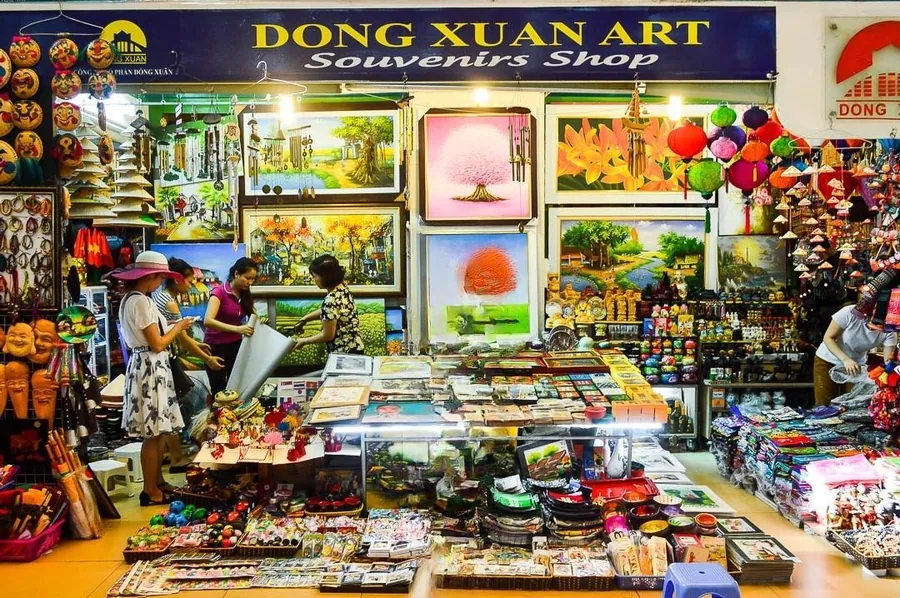
- Dong Xuan Market
- Old Quarter lanes
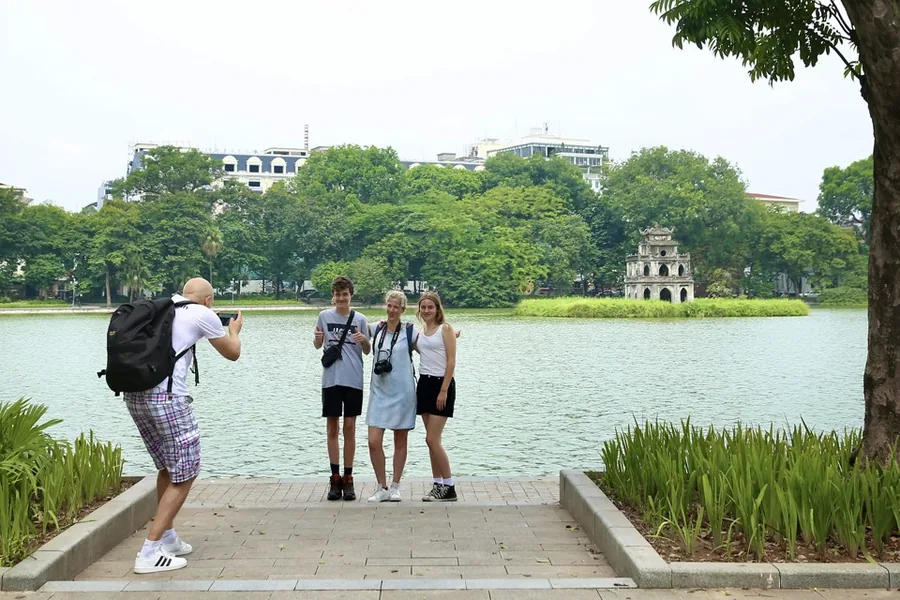
- Hoan Kiem Lake
Moves from adaptive railway heritage into market and civic landscapes.
Best for: First-time visitors and photographers
- Phung Hung murals
- Hang Luoc area
- Old Quarter streets
- Ta Hien Street
Contrasts curated memories of old Hanoi with contemporary street economies.
Best for: Urban-culture visitors
- Check current official programming
- Phung Hung cultural space
- Nearby traditional market or Old Quarter event
Uses the street as an event platform without assuming seasonal programming is permanent.
Best for: Repeat visitors
Art and design visitorVery highPublic art is the street's principal visitor identity.
Urban-history visitorHighRailway infrastructure and Old Quarter edges provide strong historical context.
Street photographerHighRepeated arches, murals and everyday movement create layered compositions.
FamilyHighA short outdoor art walk can work well with children outside crowded events.
Nightlife visitorLow-mediumThe street is not primarily a nightlife destination.
Mobility-limited visitorVariableStreet-level viewing is possible, but pavement conditions, crowds and temporary programming can affect movement.
- Questions To Ask
- How can obsolete or underused infrastructure edges become cultural public space?
- How does public art change perceptions of railway heritage?
- What happens when a temporary art intervention becomes a durable visitor landmark?
- How do events alter the everyday function of the street?
- How should future arch reuse protect railway capacity and structural safety?
- How does curated nostalgia shape contemporary ideas of Hanoi identity?
- Research Value
- Phung Hung is a compact case study in adaptive reuse, public art, heritage interpretation and the governance of residual infrastructure space.
LocationPhung Hung Street, Hoan Kiem, Hanoi, Vietnam
Open in Google Maps ↗Visitor information- Admission
- Outdoor public street space; verify any event-specific arrangements.
- Typical Duration
- 30–60 minutes, longer when combined with the Old Quarter
- Best Visit Style
- Walk the mural section in daylight or late afternoon and continue into the Old Quarter.
- Access Note
- Traffic, event and pedestrian conditions can change; follow current local controls.
01Phung Hung Mural Street is not the whole of Phung Hung Street.
02The 19-mural project is not the same thing as the much larger 2026 proposal concerning 131 railway arches.
03Not every railway arch is currently an open cultural or commercial unit.
04The murals are not a substitute for understanding the railway and Old Quarter heritage context.
05The street is not permanently programmed with festivals or stalls.
06Future Phung Hung–Gam Cau redevelopment should not be described as completed until officially implemented.
1889–1902 contextModern street and railway landscape takes shape
Official Hanoi cultural reporting links Phung Hung's modern street history to the filling of the former citadel moat and the railway connection from Hang Co toward Long Bien Bridge.
Mural project is implemented
Vietnamese and Korean artists work on the first public-art phase along the eastern railway arches.
Mural space enters public cultural use
Hoan Kiem reporting identifies 2018 as the start of public introduction and community cultural use of the Phung Hung mural space.
The street becomes an event platform
Exhibitions, commemorations and seasonal cultural activities reinforce the space's role beyond static murals.
A wider arch-corridor proposal emerges
Hanoi publishes preliminary investment information for a broader cultural, service, commercial and tourism project around railway arches south of Long Bien Bridge.
- Phố bích họa
- Mural street or street space characterized by public wall paintings.
- Vòm cầu đường sắt
- Railway arch: a structural arch supporting the elevated railway approach.
- Ký ức Hà Nội
- Hanoi memory; a recurring interpretive theme linking the murals to remembered urban life.
- Không gian công cộng
- Public space used for movement, gathering, culture and community life.
- Adaptive reuse
- Giving an existing structure or space a new use while retaining important physical or historic character.
- Phố cổ Hà Nội
- Hanoi Old Quarter, the historic commercial street district adjoining the mural area.
What is Phung Hung Mural Street?
It is a public-art space along railway arches on Phung Hung Street near Hanoi's Old Quarter, best known for murals evoking memories of older Hanoi.
How many murals were in the original project?
Hanoi cultural authorities described 19 works in the nearly 200-metre first-phase mural space.
Who created the murals?
Vietnamese and Korean artists participated in the project, which was developed through Hanoi/Hoan Kiem cooperation with Korean partners and UN-Habitat involvement.
Is the whole of Phung Hung Street a mural street?
No. The visitor label refers to a specific art-space section associated with the railway arches.
Is there an entrance fee?
It is an outdoor public street space; temporary events or nearby services can have their own arrangements.
How long should I spend there?
About 30–60 minutes works for the art space, with more time if you connect it to the Old Quarter.
What do the murals show?
Many evoke Hanoi memories such as old streets, trams, cyclo imagery, Long Bien Bridge and everyday urban life.
Is it good for children?
Generally yes as a short outdoor art walk, with normal supervision around streets and crowds.
Is it a nightlife street like Ta Hien?
No. Its core identity is public art, railway heritage and cultural public space rather than nightlife.
Can I enter the railway arches?
Do not assume so. Access depends on the specific arch and current authorized use.
Are festivals held here?
The space has hosted cultural and seasonal activities, but programming changes and should be checked for the intended date.
What should I combine with it?
Dong Xuan Market, the Old Quarter, Hoan Kiem Lake and nearby central-Hanoi cultural sites combine naturally.
What is the 131-arch project?
It is a wider 2026 proposed cultural, service, commercial and tourism development around railway arches south of Long Bien Bridge; it should be treated as a separate future-project context, not as the completed mural street.
Will the murals disappear under the new project?
Current proposal information is not sufficient to make that claim. Future implementation should be followed through official approved plans.
What is the biggest mistake visitors make?
Treating the murals as isolated photo backdrops and missing the railway-infrastructure and Old Quarter context that gives the space meaning.