Street guide

Ta Hien Street

Ta Hien is a short street in Ha Noi's Old Quarter known for dense historic streetscape, evening street life, bia hơi, casual food and its role within the wider pedestrian network around Hoan Kiem Lake.

Overview

Read the street through time, movement and ground-level public life.

Ta Hien is best understood as two experiences occupying the same narrow Old Quarter street. By day, its scale, connected lanes and surviving urban fabric reveal the commercial morphology of historic Ha Noi. By evening, low stools, food, bia hơi, bars, music and dense pedestrian activity transform it into one of the Old Quarter's most recognizable nightlife spaces. The street should not be reduced to the nickname 'Beer Street': its value comes from the interaction between architecture, trade, public space, food culture, residents and contemporary visitor economy. A useful dashboard therefore helps visitors understand when to go, how the atmosphere changes by hour, what to eat and drink, how to behave in a residential-commercial street, and how Ta Hien connects with the wider Old Quarter rather than treating it as an isolated nightlife attraction.

Key things to understand

  • Visit once before sunset and again after dark if you want to understand how dramatically the street changes.
  • Look above the shopfronts; upper floors often reveal more of the historic streetscape than the brightly lit ground level.
  • Treat Ta Hien as part of an Old Quarter walking network rather than a standalone destination.
  • Try bia hơi or local snacks for cultural context, but the street can be enjoyed without drinking alcohol.
  • Observe the relationship between tiny commercial frontages and public seating spilling into the street.
  • Explore Luong Ngoc Quyen and surrounding lanes to understand the wider nightlife and food district.
  • Keep pedestrian and resident access clear when stopping for photographs.
  • For architecture, go earlier; for social energy, go later.
  • Use Hoan Kiem Lake as the easiest orientation point before or after the visit.
  • Expect atmosphere and business activity to vary significantly by weekday, weekend, weather and pedestrian-street arrangements.
Street perspective

How to understand this street

Why it matters

Ta Hien demonstrates how historic Old Quarter morphology remains adaptable. A street built around compact plots and mixed urban life now supports a highly visible visitor economy without ceasing to be part of a lived neighborhood.

What makes it distinctive

Its strongest feature is temporal transformation: architecture and local commerce dominate one reading by day, while seating, food, light, sound and social density create another after dark.

What visitors often miss

Most visitors look horizontally at tables and signs. Looking upward reveals balconies, openings, narrow facades and domestic traces that explain why this nightlife street still belongs to the historic Old Quarter.

Ta Hien is a historic Old Quarter street that becomes an open-air social room after dark.

Street character

Read the street as an urban system

Identity
Daytime
A narrow Old Quarter street where visitors can observe historic urban scale, mixed commercial-residential buildings and connections with neighboring lanes.
Evening
A high-energy social street characterized by low seating, food, beer, bars, music and dense pedestrian activity.
Late Night
Activity becomes more nightlife-oriented and can be louder and more crowded; exact operating conditions depend on current regulations and individual businesses.
Core Insight
Ta Hien's identity comes from transformation over time. The same physical street supports heritage observation, commerce, food and nightlife at different hours.
Street morphology
Scale
Short, narrow and pedestrian-scaled, with dense frontages typical of the Old Quarter.
Frontages
Small commercial units create frequent entrances and rapid changes in activity along the street.
Upper Floors
Upper levels can preserve architectural details that are visually overwhelmed by ground-floor signage.
Street Edge
Seating, parked vehicles, vendors and pedestrians compete for limited edge space.
Connections
Ta Hien functions together with Luong Ngoc Quyen and the surrounding Old Quarter lane network.
Urban Lesson
The street demonstrates how historic morphology can support constantly changing commercial uses without changing the basic narrow-lot street structure.
Time rhythm

How the street changes through the day

Day

Quieter and more legible as a historic Old Quarter street, with façades, narrow plots, mixed residential-commercial use and lane connections easier to read.

Best for
  • Architecture
  • Street photography
  • Old Quarter morphology
  • Walking connections

Watch for: Some businesses are inactive, so the street feels less representative of its best-known evening identity.

Evening

The street becomes a dense social space shaped by low seating, food, bia hoi, bars, music and heavy pedestrian activity.

Best for
  • Street atmosphere
  • Food and drink
  • People-watching
  • Night photography

Watch for: Crowds, noise, seating spillover and changing pedestrian or enforcement conditions.

Late Night

Nightlife becomes more dominant and the street is less useful for reading architecture or everyday neighborhood life.

Best for
  • Nightlife
  • Late social atmosphere

Watch for: Higher noise, denser crowds, alcohol-related risk and more difficult navigation.

08:00–11:00

Quietest and most useful for architecture and street photography.

Best for: Urban form, facades, alleys and low-crowd exploration.

Trade-off: Little of the famous nightlife atmosphere is visible.

15:00–17:30

Transition period as businesses prepare for evening.

Best for: Seeing both daytime fabric and setup for nightlife.

Trade-off: Can feel operational rather than atmospheric.

18:00–20:30

Lively but generally easier to navigate than peak late evening.

Best for: First-time visitors, food and street atmosphere.

Trade-off: Popular tables can fill quickly.

20:30 onward

More intense nightlife atmosphere with denser crowds and louder venues.

Best for: Social nightlife.

Trade-off: Less suitable for architecture, families or visitors sensitive to noise.

Architecture

Read the buildings and edges that shape the street

01

Narrow-frontage buildings

Look for: Tall, narrow plots and compact shopfronts.

Reflect the dense commercial parcel pattern of the Old Quarter.

02

Mixed historic facades

Look for: Balconies, shutters, upper-floor openings, plaster details and varied rooflines.

Reveal layers of architectural change beyond modern signs.

03

Commercial ground floors

Look for: Highly adaptable storefronts and seating extending toward the street.

Show how old buildings remain economically active.

04

Upper-floor domestic space

Look for: Laundry, plants, windows and balconies above nightlife businesses.

Reminds visitors that the district remains lived-in, not merely an entertainment zone.

Street life

Food, conversation and shared public space

Food and drink
Signature Context
Ta Hien is strongly associated with casual beer drinking and street-side socializing, especially bia hơi culture.
Food Types
  • Grilled snacks
  • Fried snacks
  • Vietnamese sharing dishes
  • Noodles
  • Street-food plates
  • Bar snacks
  • International visitor-oriented food
  • Non-alcoholic drinks
Bia Hoi
Bia hơi is fresh draught beer associated with casual social drinking in northern Vietnam. Quality, serving style and price vary by venue.
Non Alcohol Options
Visitors do not need to drink alcohol to enjoy Ta Hien. Food, coffee, soft drinks, tea and street observation provide alternatives.
Ordering Tip
Confirm prices before ordering where menus are unclear and review the bill before payment.
Food Safety
Use normal street-food judgment: look for high turnover, visible cooking, clean utensils and appropriate food storage.
Social culture
Low Stools
Small stools and compact tables allow businesses to serve many customers within extremely limited street frontage.
Shared Space
The distinction between restaurant, pavement and street can feel fluid, especially during busy evenings.
Conversation
The street's appeal is strongly social rather than purely visual.
International Mix
Local residents, domestic travelers and international visitors can occupy the same small area.
Resident Context
Upper floors and nearby lanes remain part of a lived urban neighborhood.
Respect Rule
Nightlife behavior should account for residents and workers who share the same street.
Walking connections

Use the street as part of a wider urban route

01

Luong Ngoc Quyen

Immediate extension of the social, food and nightlife area.

A few minutes
02

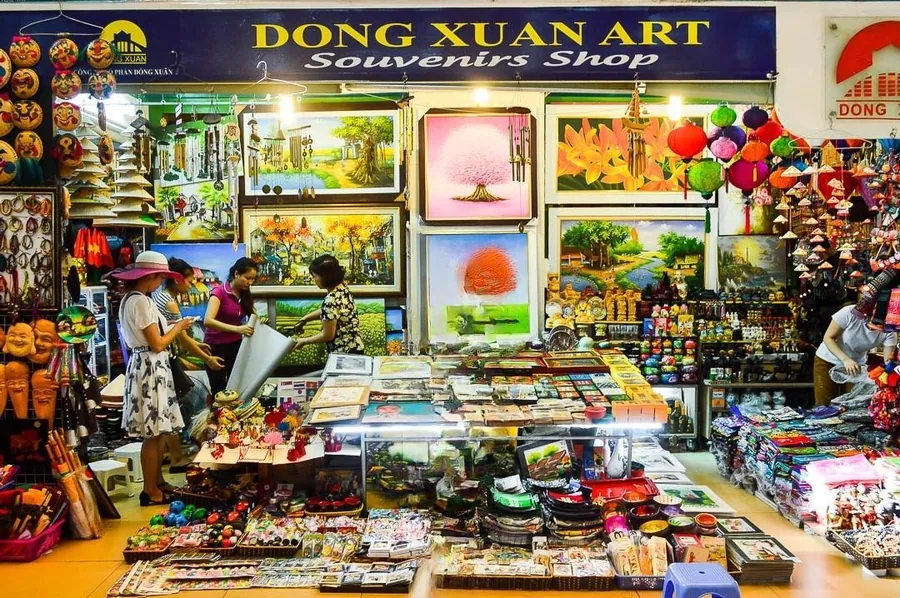
Dong Xuan Market

Adds wholesale commerce and daytime market culture.

Roughly 10–15 minutes depending on route
03

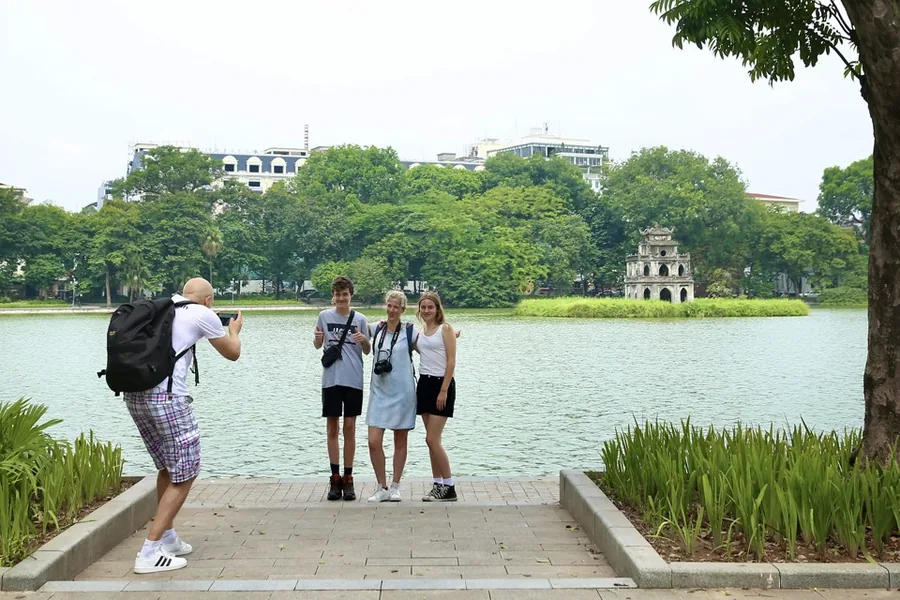
Hoan Kiem Lake

Primary orientation landmark and natural start or endpoint.

Roughly 5–10 minutes depending on starting point
04

Vietnamese Water Puppetry

Creates a strong evening culture-plus-street-life itinerary.

Within the central Old Quarter / Hoan Kiem area
Photography

Photograph the street without reducing it to a backdrop

Best Light
Morning and late afternoon are better for facade detail; evening is better for atmosphere and neon.
Daytime Subjects
  • Upper-floor architecture
  • Narrow street perspective
  • Shop preparation
  • Balconies and shutters
  • Connections with adjoining lanes
Evening Subjects
  • Low-stool street seating
  • Crowd density
  • Food preparation
  • Light and signage
  • Social interaction
Ethical Note
A crowded nightlife street is not blanket consent for close-up photography.
Composition Tip
Include upper floors in frames so images communicate Old Quarter urban character rather than only bars.
Visitor guidance

Use the street comfortably and respectfully

Safety
Crowds
Peak evenings can be extremely dense. Keep phones, wallets and bags secure.
Traffic
Motorbikes and service vehicles may still appear in surrounding lanes even when pedestrian activity dominates.
Alcohol
Avoid excessive drinking, especially when navigating unfamiliar narrow streets afterward.
Bill Checking
Review itemized or verbal totals before payment.
Food
Use normal judgment for street-food hygiene and food allergies.
Noise
Visitors sensitive to loud music should choose early evening or daytime.
Children
Families generally benefit from visiting before peak nightlife hours.
Emergency Orientation
Know the direction of a larger street or Hoan Kiem Lake rather than relying on memory inside the lane network.
Accessibility
Street Level
The experience is primarily at street level, but dense seating, crowds, parked vehicles and uneven surfaces can obstruct movement.
Wheelchair
Possible in some periods but peak evening conditions can be difficult; route-level accessibility should not be assumed.
Visual Impairment
Crowded shared street space and moving vehicles in adjoining lanes require additional care.
Hearing Sensitivity
Peak nightlife can be very loud.
Best Window
Daytime or early evening generally offers easier navigation.
Editorial Rule
Do not label Ta Hien fully accessible without current on-site verification.
Family use
Fit
Medium overall; better in daytime or early evening.
Strengths
  • Compact walking scale
  • Visual street life
  • Easy connection to Hoan Kiem Lake and the wider Old Quarter
Challenges
  • Late-evening crowds
  • Noise
  • Alcohol-centered venues
  • Stools and narrow walking space
  • Motorbike movement in adjoining lanes
Best Strategy
Families with young children should favor daytime or early evening and leave before peak nightlife.
Night experience
Identity
Ta Hien is one of Ha Noi's most concentrated nightlife streets, but its strongest interpretation comes from seeing nightlife as one layer of a historic mixed-use neighborhood.
Elements
  • Low-stool seating
  • Bia hoi and casual food
  • Bars and music
  • Dense pedestrian movement
  • Illuminated shopfronts
  • Residential upper floors
Difference From Civic Promenade
Unlike a broad civic walking street, Ta Hien is narrow, commercial, socially compressed and embedded in Old Quarter residential fabric.
Best For
Visitors seeking concentrated street-level nightlife rather than a large open public promenade.
Transport
Pickup and drop-off are often easier on nearby larger streets when the immediate area is crowded or pedestrian-prioritized.
Practical visit
Duration
30–45 minutes for a walk-through; 60–90 minutes for food or drinks; longer for nightlife.
Walking
The street is best reached and explored on foot once inside the Old Quarter.
Ride Hailing
Drop-off and pickup may be easier on a nearby accessible street when pedestrian restrictions or crowds limit vehicle access.
Parking
Do not assume parking directly on Ta Hien. Use authorized parking in the surrounding area.
Cash
Vietnamese dong is useful for small purchases.
Cards
Acceptance varies by business.
Bank Transfer
Common locally but may not be practical for all foreign visitors.
Connectivity
Mobile coverage is generally strong in central Ha Noi.
Weather
Rain compresses activity under awnings and can make the narrow street more congested.
Etiquette
  • Do not block doorways, alleys or resident access while photographing the street.
  • Ask before taking close portraits of residents, staff or customers.
  • Keep noise reasonable when moving into quieter residential lanes.
  • Do not leave rubbish on stools, pavements or doorsteps.
  • Confirm the price before ordering if no clear menu is displayed.
  • Check the final bill rather than assuming verbal orders were recorded correctly.
  • Do not move tables or stools into traffic paths without staff direction.
  • Respect staff instructions when seating must be moved because of local enforcement or traffic.
  • If drinking alcohol, keep control of personal belongings and plan the return journey in advance.
  • Remember that Ta Hien is a real neighborhood as well as a visitor destination.
Suggested routes

Build the visit around time and purpose

01

Old Quarter evening introduction

2–3 hours
  1. Hoan Kiem Lake
  2. Old Quarter lanes
  3. Ta Hien Street
  4. Luong Ngoc Quyen

Moves from civic public space into progressively denser commercial and social streets.

Best for: First-time visitors

02

Market to nightlife

2–4 hours
  1. Dong Xuan Market
  2. Old Quarter specialty streets
  3. Ta Hien Street
  4. Hoan Kiem Lake

Shows how daytime wholesale and evening visitor economies coexist in the Old Quarter.

Best for: Visitors interested in urban commerce

03

Culture and evening street life

2–3 hours
  1. Vietnamese Water Puppetry
  2. Ta Hien Street
  3. Hoan Kiem Lake

Combines formal traditional performance with contemporary informal public culture.

Best for: Compact evening itinerary

04

Architecture before nightlife

90–150 minutes
  1. Ta Hien in late afternoon
  2. Nearby lanes
  3. Return to Ta Hien after dark

Makes the street's time-based transformation directly visible.

Best for: Photography and urban-history visitors

Visitor fit

Who gets the most from this street

First-time Ha Noi visitorHigh

Compact introduction to Old Quarter evening energy.

Street photographerHigh

Strong contrast between daytime architecture and evening social activity.

Food-focused visitorHigh

Easy access to casual food and the wider Old Quarter dining network.

Nightlife visitorHigh

One of the city's best-known concentrated nightlife streets.

Architecture researcherMedium-high

Useful if visited before signage, crowds and darkness dominate the streetscape.

Family with young childrenMedium

Better earlier in the evening than at peak nightlife.

Noise-sensitive visitorLow at peak hours

Choose daytime or early evening instead.

Mobility-limited visitorVariable

Crowds, stools, narrow pavements and uneven street space can complicate movement.

Urban research

Questions worth asking while you walk

Questions To Ask
  • How does a narrow historic street absorb a modern nightlife economy?
  • Which architectural elements survive above heavily modified shopfronts?
  • How is limited street space allocated among pedestrians, residents, vendors and vehicles?
  • How does activity change by hour?
  • Where does visitor-oriented commerce end and neighborhood life begin?
  • How do pedestrian regulations change commercial use of the street?
  • How does evening seating temporarily change the effective width and social ownership of public space?
  • How do nightlife businesses coexist with residential upper floors and quieter adjoining lanes?
Research Value
Ta Hien is a compact case study in adaptive reuse, tourism pressure, street commerce and time-based transformation of public space.
Plan your visit

Location, access and visitor essentials

Visitor information
Admission
No street admission fee.
Typical Duration
30–90 minutes, longer when dining or socializing
Best Visit Style
Visit before sunset for architecture and return after dark for street atmosphere.
Access Note
Pedestrian and vehicle conditions can change with current Old Quarter traffic arrangements.
Interpretation

Common mistakes when reading the street

01

Ta Hien is not only a beer street.

02

It is not a purpose-built nightlife district; it occupies historic Old Quarter urban fabric.

03

Visitors do not need to drink alcohol to experience it.

04

The street is not equally busy throughout the day.

05

The surrounding lanes are part of the experience.

06

Nightlife businesses do not eliminate residential life above and around them.

07

A daytime visit and nighttime visit reveal substantially different aspects of the same place.

08

Vehicle and pedestrian arrangements can change according to current local regulations.

Timeline

How the street reached its present character

Pre-modern Old Quarter

Dense commercial street fabric develops

The area forms part of the historic trading landscape of Thang Long–Ha Noi, characterized by compact streets and specialized commerce.

19th–early 20th century

Urban layers accumulate

Commercial buildings and later architectural influences contribute to the mixed streetscape visible in the Old Quarter.

20th century

Residential and commercial uses continue

The street remains embedded in the everyday economic and domestic life of central Ha Noi.

Late 20th–early 21st century

Visitor economy grows

Tourism in the Old Quarter increases the concentration of food, drink and accommodation businesses.

21st century

Ta Hien becomes internationally recognizable nightlife shorthand

The street becomes widely known to visitors for bia hoi and evening street life.

Contemporary period

Pedestrian tourism and neighborhood life overlap

Ta Hien operates within a wider Old Quarter environment where heritage conservation, tourism, commerce, traffic management and residential life must coexist.

Glossary

Useful street and urban-culture terms

Phố
Vietnamese word commonly used for street or urban street area.
Phố Tạ Hiện
Vietnamese name for Ta Hien Street.
Bia hơi
Fresh draught beer associated with casual, inexpensive social drinking in northern Vietnam.
Old Quarter
Historic commercial core of Ha Noi with dense streets, narrow plots and long traditions of trade.
Vỉa hè
Pavement or sidewalk; an important flexible commercial and social space in Vietnamese cities.
Phố đi bộ
Pedestrian street or pedestrianized street area, often operating according to specified times rather than permanently.
Nhà ống
Tube-house form characterized by a narrow frontage and deep plot, common in Vietnamese urban areas.
Connections

Continue through the surrounding urban fabric

Questions

Frequently asked questions

What is Ta Hien Street famous for?

It is best known for dense evening street life, bia hoi, casual food, bars and its location in the heart of Ha Noi's Old Quarter.

Is Ta Hien only for drinking beer?

No. It is also useful for architecture, street photography, food, people-watching and understanding how the Old Quarter changes from day to night.

When is the best time to visit?

Visit before sunset for architecture and after about 18:00 for social atmosphere. Peak nightlife develops later in the evening.

Is there an entrance fee?

No. Ta Hien is a public street; you pay only for food, drinks or services you choose.

How long should I spend there?

About 30–45 minutes is enough to walk through, while a food or social stop commonly extends the visit to 60–90 minutes or more.

What is bia hoi?

Bia hoi is fresh draught beer strongly associated with casual social drinking in northern Vietnam.

Do I have to drink alcohol?

No. The street can be experienced through food, architecture, photography and atmosphere, and businesses may offer non-alcoholic options.

Is Ta Hien suitable for families?

Earlier evening is generally more suitable. Peak nightlife can be crowded, noisy and less comfortable for young children.

Is Ta Hien safe?

Use normal nightlife and crowded-street precautions: secure valuables, watch traffic in adjoining lanes, check bills and moderate alcohol consumption.

Can cars or motorbikes enter?

Access depends on the time, street and current pedestrian arrangements. Do not assume the whole surrounding district is permanently vehicle-free.

Can I pay by card?

Some businesses may accept cards, but payment methods vary. Vietnamese dong remains useful.

What should I photograph?

Before dark, focus on upper-floor facades, narrow plots and lane geometry. At night, focus on the transformation of public space, food and social activity.

What should I combine with Ta Hien?

Hoan Kiem Lake, Dong Xuan Market, Old Quarter streets and a water-puppet performance all combine naturally with it.

Is Ta Hien the same as Hanoi's entire nightlife scene?

No. It is one concentrated Old Quarter nightlife area; Ha Noi has many other nightlife districts and venue types.

What is the biggest mistake visitors make?

Arriving only at peak night hours and assuming the bars represent the entire identity of the street.

Sources

Primary references

Vietnam National Authority of Tourism3 walking tours of Hanoi
Source ↗
Vietnam National Authority of TourismA traveller's guide to Vietnam's fresh beer
Source ↗
Vietnam National Authority of Tourism11 must-see attractions in Ha Noi
Source ↗
Ha Noi Department of Culture and SportsExpanding walking space in the south of the old town
Source ↗