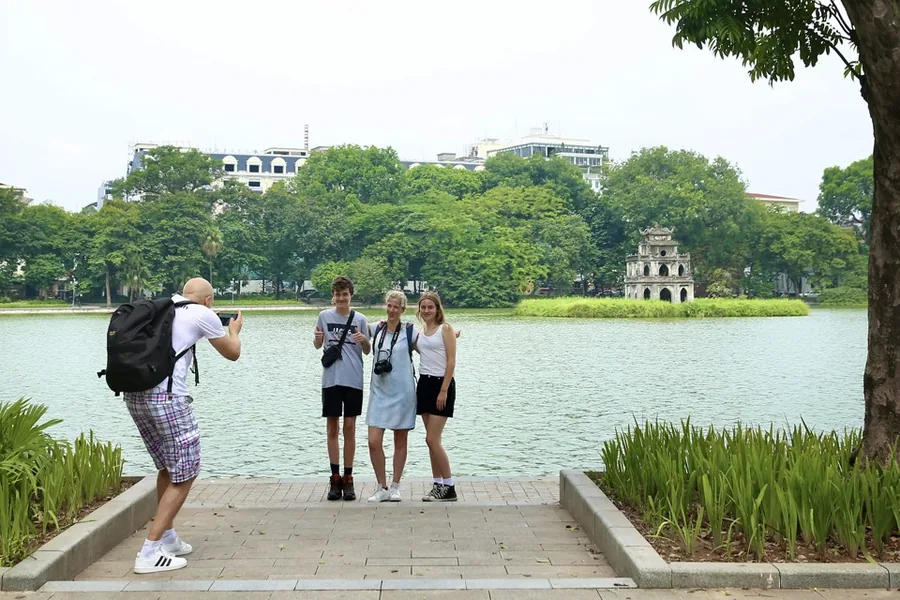
Hanoi Old Quarter is the historic commercial core beside Hoan Kiem Lake, where former guild streets, narrow tube houses, religious sites, street food and contemporary commerce form one of the capital's most distinctive walking environments.
Historic centre of Ha Noi beside Hoan Kiem Lake
Overview
Understand the place through its setting, meaning and everyday use.
Hanoi Old Quarter is best understood as a living urban district rather than a collection of isolated attractions. Its historic street network grew from craft and trading communities serving Thang Long, with many street names preserving associations with particular goods or occupations. Narrow-fronted tube houses, communal houses, temples, pagodas, markets, shops, cafés, food stalls and homes remain layered into the same dense urban fabric. The area was recognized as a National Historic Site in 2004, yet its strongest character comes from the continued overlap of heritage and everyday commerce. Walking slowly reveals how different streets retain different identities, how old houses adapt to new uses, and how Hoan Kiem Lake provides a natural orientation point at the edge of the quarter.
Key things to understand
Walk several former guild streets rather than treating the Old Quarter as one generic shopping district.
Read street names such as Hang Bac, Hang Ma, Hang Gai and Lan Ong as clues to historic trade identities.
Look beyond shopfronts for tube-house depth, courtyards, upper floors and layered architectural changes.
Visit the Heritage House at 87 Ma May to understand domestic and commercial space at a more intimate scale.
See O Quan Chuong as a surviving historic gateway associated with the old urban fabric.
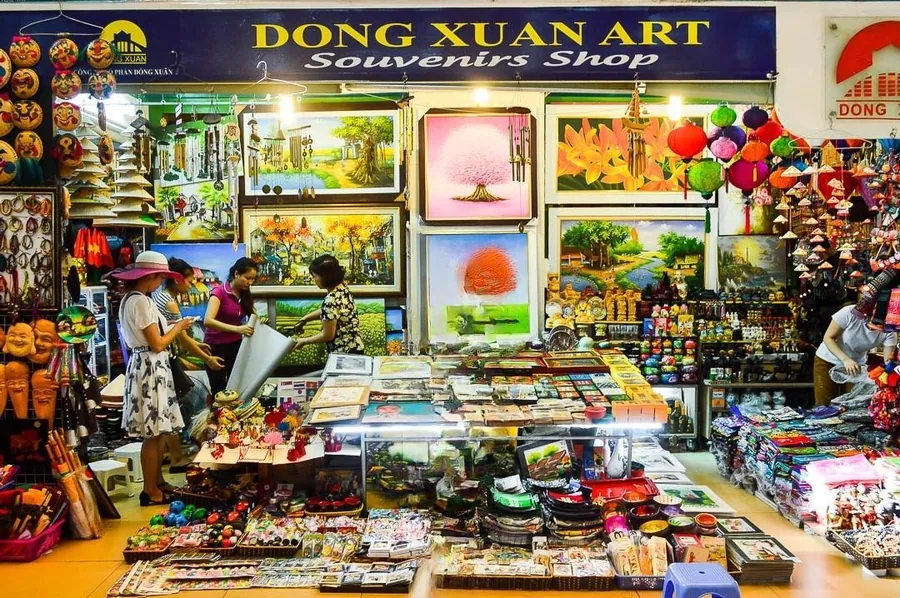
Use Dong Xuan Market to understand the continuing wholesale and trading role of the quarter.
Notice temples, communal houses and pagodas embedded among shops and homes.
Explore food streets, cafés and small vendors as part of living urban culture rather than separate attractions.
Begin or finish at Hoan Kiem Lake to understand how the quarter connects with the wider historic centre.
Return at a different time of day because morning trade, daytime commerce and evening street life produce different experiences.
Place perspective
How to understand this place
Why it matters
Hanoi Old Quarter preserves one of the clearest surviving relationships between the capital's historic commercial street structure and contemporary urban life.
What makes it distinctive
Former guild identities, narrow tube houses, religious sites, markets, food and modern commerce remain compressed into an unusually dense and walkable street network.
What visitors often miss
The quarter is not one uniform historic attraction: each street has a different commercial history, architectural condition and present-day rhythm, and much of the most revealing evidence sits above shopfront level or behind narrow entrances.
Hanoi Old Quarter is a living commercial heritage district where the old logic of craft streets and tube houses still shapes everyday city life.
Place identity
Understand its role, setting and meaning
Identity
Place Type
Living historic commercial quarter and urban heritage district
Historic Role
Commercial and craft quarter serving Thang Long–Ha Noi
Heritage Status
Recognized as a National Historic Site in 2004
Urban Role
A major concentration of historic streets, commerce, religious sites, food and visitor activity in central Ha Noi
Visitor Character
Best understood through walking and repeated transitions between streets rather than through one landmark
Core Experience
Read the relationship between old trades, narrow architecture, commerce, worship and everyday street life
Spatial role
Urban Form
A dense network of short streets and intersections immediately north and west of Hoan Kiem Lake.
Historic Logic
Craft and trading communities clustered by occupation and product, leaving a strong imprint on street names and local identity.
Orientation
Hoan Kiem Lake forms the clearest southern orientation anchor, while Dong Xuan Market helps orient the northern part of the quarter.
Walking Logic
Short blocks reward slow movement, frequent turns and comparison between streets rather than a single linear route.
Best Mental Model
Think of the Old Quarter as a network of overlapping micro-districts, trades, religious places and domestic spaces.
Heritage meaning
National Recognition
Hanoi's Old Quarter was recognized as a National Historic Site in 2004.
Urban Heritage
Official Hanoi cultural sources describe it as a distinctive urban heritage area with traditional craft streets, specialized trading streets and numerous historical, cultural and architectural relics.
Living Character
Heritage remains interwoven with active shops, homes, food businesses, worship and daily movement.
Street food and social activity become more prominent as temperatures ease.
Evening
Restaurants, cafés, bars and night-oriented commerce create a more visitor-intensive atmosphere in some areas.
Weekend Character
Pedestrian and night-market activity can reshape circulation and crowd patterns, subject to current local arrangements.
Landmark system
Read the key elements as one connected place
01
Heritage House at 87 Ma May
Historic domestic and commercial architecture
A useful reference for understanding the spatial organization of a traditional Old Quarter house.
02
O Quan Chuong
Historic urban gateway
A surviving marker of the older defended urban landscape and one of the quarter's strongest orientation landmarks.
03
Dong Xuan Market
Commercial anchor
Connects the quarter's historic trading identity with a continuing large-scale market function.
04
Bach Ma Temple
Religious and historical landmark
Shows how worship and urban commerce coexist within the dense street network.
05
Hoan Kiem Lake
Southern orientation anchor
The transition from open civic waterfront into dense commercial streets makes the quarter's urban form easier to understand.
How to read the place
Look beyond the obvious
01
Why do so many streets begin with 'Hang'?
Read the names as traces of historic commodity, craft and trading specialization, while recognizing that present-day businesses may have changed.
02
What makes a tube house distinctive?
Look beyond the narrow facade: depth, courtyards, mixed commercial-domestic use and vertical additions are part of the building logic.
03
Is the Old Quarter mainly a heritage attraction?
No. Its value comes from the overlap of protected heritage with active commerce, worship, housing, food and everyday movement.
04
Why wander rather than follow one fixed route?
Different streets reveal different trades, architecture, crowd patterns and religious spaces; turning into smaller lanes is part of understanding the district.
Walking
Understand the place through movement and spatial sequence
Recommended Approach
Choose two or three thematic anchors and connect them through smaller streets on foot.
Pace
Slow, with frequent stops to observe upper floors, shop interiors, religious entrances, food preparation and street transitions.
Orientation Tip
Use Hoan Kiem Lake to the south and Dong Xuan Market toward the north as simple reference points.
Traffic
Narrow streets can carry motorcycles, cars, vendors and pedestrians simultaneously; cross deliberately and remain alert.
Extension
Continue toward Hoan Kiem Lake, Ngoc Son Temple or nearby cultural performances rather than treating the quarter as an isolated zone.
Suggested routes
Build the visit around time and purpose
01
First orientation
2–3 hours
Begin near Hoan Kiem Lake
Enter the historic street network
Walk selected Hang streets
Visit a heritage or religious site
Finish around Dong Xuan Market or return toward the lake
Best for: First-time visitors
02
Architecture and heritage
3–4 hours
Heritage House at 87 Ma May
Observe tube houses and courtyards
O Quan Chuong
A temple or communal house
Walk contrasting commercial streets
Best for: Architecture and urban history
03
Trade and food
3–5 hours
Traditional trade street
Dong Xuan Market
Local lunch or snack
Coffee stop
Evening food streets
Best for: Commerce and food culture
04
Evening quarter
2–4 hours
Arrive before sunset
Walk central streets
Eat locally
Explore evening pedestrian areas where operating
Finish with a cultural performance or café
Best for: Atmosphere and nightlife
Visitor fit
Who gets the most from this place
First-time visitors to Ha NoiExcellent
The quarter concentrates architecture, food, commerce, heritage and everyday city life into a walkable area.
Urban explorersExcellent
Its strongest qualities emerge through slow walking and comparing different blocks.
Food-focused travelersExcellent
Street food, small restaurants, cafés and markets are deeply integrated into the district.
Architecture and history enthusiastsHigh
Tube houses, religious sites, heritage houses and historic street structure provide rich urban evidence.
PhotographersHigh
Dense street life, architecture, trade and changing light create varied subjects.
Visitors seeking quiet sightseeingModerate
The quarter is active, noisy and commercially intense for much of the day.
Public streets are continuously accessible, while individual heritage sites, markets, shops and cultural venues keep their own schedules.
Admission
No general admission for the district; individual attractions and performances may charge separately.
Recommended Duration
2–4 hours for a first exploration; half to full day for deeper heritage, food and cultural visits.
Crowd Level
Variable; major commercial streets and evening areas can become very busy.
Accessibility
Compact but inconsistent because of narrow sidewalks, traffic, thresholds and crowding.
Dress Code
No district-wide dress requirement; respectful clothing and behavior are appropriate at religious sites.
Booking
Not required for the district itself; individual performances, tours or attractions may require tickets.
01
From Hoan Kiem Lake
Walking
Immediate to 10 minutes
The historic street network begins directly beside the lake area, making walking the natural transition.
02
From central Ha Noi
Taxi / ride-hailing
Depends on starting point and traffic
Choose a clear edge landmark or hotel for drop-off, then continue on foot.
03
From Noi Bai International Airport
Taxi / ride-hailing / airport transport
Typically around 35–60 minutes
Travel time varies significantly with traffic and final drop-off point.
04
Within the Old Quarter
Walking
Best option
Short blocks and dense activity make walking more informative than moving between individual stops by vehicle.
Timing
When to go
Early morning
Best for neighborhood rhythm
Deliveries, breakfast and quieter streets reveal a less visitor-oriented side of the quarter.
Daytime
Best for heritage interiors
Useful for heritage houses, temples, shops and cultural interpretation, subject to individual opening hours.
Late afternoon
Best transition
Street food and social activity increase as the day cools.
Evening
Best for atmosphere
Dining, cafés, bars and pedestrian activity become more prominent in parts of the quarter.
Practical
Facilities and access
Food and drinksExtensive
Restaurants, street food, cafés and convenience options are distributed throughout the quarter.
AccommodationExtensive
Hotels, hostels and guesthouses range from simple stays to boutique properties.
RestroomsDistributed
Available through attractions, restaurants, cafés and other visitor facilities.
ATMs and paymentsWidely available
Digital payments are common in many businesses, but cash remains useful for smaller vendors.
ParkingConstrained
Walking or drop-off at the edge is often easier.
ShoppingExtensive
Traditional goods, contemporary retail, souvenirs and everyday local commerce coexist.
Experience
See more than the obvious
Things to do
Walk several historic guild and trading streets.
Visit the Heritage House at 87 Ma May.
See O Quan Chuong within the older urban structure.
Explore Dong Xuan Market and surrounding commercial streets.
Look for tube houses, internal courtyards and upper-floor architectural details.
Enter an appropriate temple, pagoda or communal house respectfully.
Try Ha Noi street food and coffee as part of the walking experience.
Compare morning neighborhood life with evening visitor activity.
Continue to Hoan Kiem Lake and Ngoc Son Temple.
Attend Water Puppetry or another traditional cultural performance nearby.
Look closer
Street names that preserve memories of historic trades and commodities.
The narrow facades and surprising depth of tube houses.
Courtyards and ventilation gaps within long buildings.
Religious and communal buildings embedded among shops.
How sidewalks function simultaneously as circulation, commerce, food space and social space.
The contrast between streets that retain specialized trade identities and those transformed by tourism or new retail.
Upper floors and rooflines hidden above modern shop signs.
Transitions between the dense quarter, Dong Xuan Market and the open space around Hoan Kiem Lake.
Photography
Visit early for deliveries, breakfast scenes and softer street light.
Use intersections to show the density and layered movement of the quarter.
Photograph architectural depth and upper floors, not only colorful shopfronts.
Ask before making close portraits of vendors, craftspeople or residents.
Respect photography restrictions in religious sites and heritage interiors.
Evening is useful for food activity, signage and social street scenes.
Local guidance
Useful visitor tips
Walk slowly
Short distances can be deceptive; the quarter rewards observation more than rapid coverage.
Look up
Many revealing architectural details sit above contemporary ground-floor signage.
Use anchors
Hoan Kiem Lake, Dong Xuan Market and major streets make navigation easier without eliminating the pleasure of wandering.
Mind traffic
Motorcycles, cars, vendors and pedestrians share constrained street space; remain alert even on narrow lanes.
Respect private space
Do not assume an open doorway or courtyard is a public attraction.
Check current arrangements
Pedestrian streets, night markets, events and traffic restrictions can change.
Interpretation
Common mistakes when understanding this place
01
Do not interpret '36 Streets' as meaning the present-day Old Quarter consists of exactly 36 streets.
02
Do not assume every street still sells the product or craft associated with its historic name.
03
Do not describe every old-looking facade as belonging to the same historical period.
04
Do not treat the Old Quarter as an open-air museum without residents, worship, deliveries and ordinary business.
05
Do not confuse the Old Quarter with the wider French Quarter or the entirety of Hoan Kiem.
06
Do not assume pedestrian-street, night-market or traffic arrangements are permanent.
07
Do not enter homes, courtyards or religious spaces merely because a doorway is open.
Timeline
How the place reached its present form
Ly–Tran periods
Commercial communities grow east of the royal citadel
Hanoi cultural authorities trace the formation of the Old Quarter to the Ly–Tran era, when people gathered near Thang Long to live, trade and produce goods.
Later premodern Thang Long
Craft and trading streets become increasingly specialized
Artisans and merchants clustered by occupation and product, shaping street identities remembered through many 'Hang' names.
16th century onward
Merchant communities add further cultural layers
Official Hanoi heritage interpretation notes the presence of Chinese merchants and additional commercial and community institutions.
French colonial period
The quarter is altered but remains a dense commercial district
Street improvements and Western architectural influences add new layers to the existing Vietnamese urban fabric.
20th century
Commerce, housing and architecture continue to adapt
Changing economic and residential conditions reshape buildings and street uses while much of the historic network remains legible.
2004
Hanoi Old Quarter is recognized as a National Historic Site
National recognition formalizes the heritage importance of the historic urban area.
Contemporary Ha Noi
Conservation and living-city pressures coexist
Heritage protection, tourism, commerce, housing and infrastructure continue to shape the quarter simultaneously.
Glossary
Useful place and heritage terms
36 Streets
A traditional expression for Hanoi's historic guild and trading quarter; it represents a cultural-historical identity rather than a literal count of today's streets.
Hang
A word appearing in many street names and historically associated with goods, trades or specialized commercial activity.
Tube house
A narrow-fronted urban house extending deeply into its plot, often organized around one or more courtyards.
Guild street
A street historically associated with communities of artisans or merchants specializing in particular goods or occupations.
Communal house
A community religious and social building often associated with local groups, protective deities or craft traditions.
O Quan Chuong
A surviving historic gateway associated with the older urban defensive landscape of Thang Long–Ha Noi.
Living heritage
Heritage sustained through continuing community practices, commerce, worship, skills and everyday use rather than preserved only as physical fabric.
It is the historic commercial and residential core of central Ha Noi, known for former guild streets, tube houses, religious sites, markets, food and dense everyday street life.
Why is it called the 36 Streets?
The phrase reflects the quarter's historic identity of specialized craft and trading streets. It should not be read as a precise count of the present-day street network.
Is Hanoi Old Quarter a protected heritage site?
Yes. Hanoi cultural authorities state that the Old Quarter was recognized as a National Historic Site in 2004.
What is the best way to explore the Old Quarter?
Walking is the best default. Choose several streets or themes and combine architecture, commerce, food and heritage sites.
How long should I spend in the Old Quarter?
Two to four hours is useful for a first orientation. A half or full day is better for heritage interiors, markets, food, cafés and cultural performances.
Are all of the old guild trades still active?
No. Some streets retain strong links with historic specializations, while others have shifted toward different retail, hospitality or tourism uses.
What is a tube house?
A characteristic narrow-fronted urban house that extends deeply into its plot, often using courtyards to bring light and air into the interior.
Is the Old Quarter the same as the French Quarter?
No. They are distinct parts of central Ha Noi with different urban histories and architectural character.
Is the Old Quarter free to visit?
Yes. There is no general admission to walk the district, although individual heritage houses, temples, performances or attractions may have separate policies.
When is the Old Quarter most atmospheric?
Early morning is useful for neighborhood life, daytime for heritage interiors and commerce, and evening for food, cafés and denser social activity.
Sources
Primary references
Ha Noi Department of Culture and SportsHonoring Heritage Values in Hanoi's Old Quarter