Heritage guide

Ngoc Son Temple

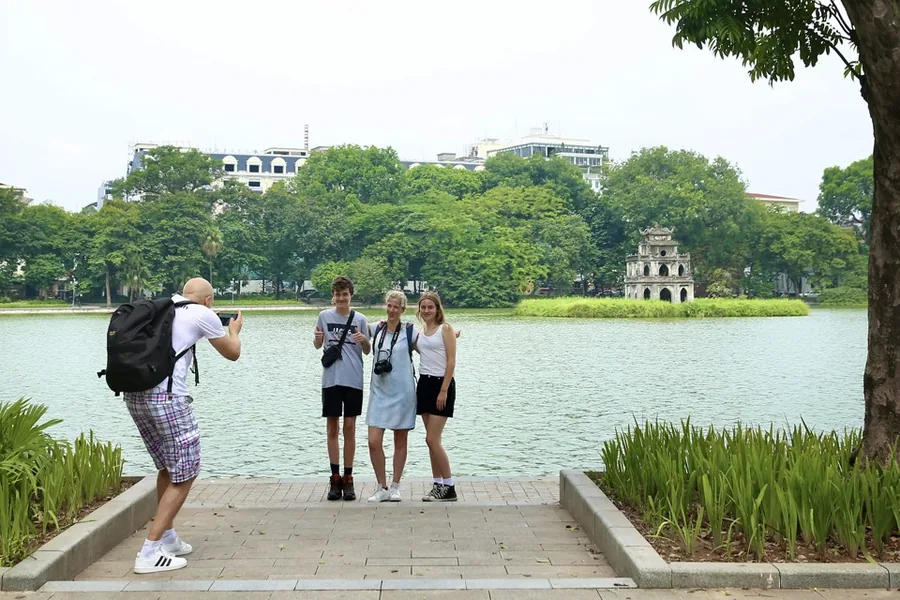
Ngoc Son Temple is a nineteenth-century religious and cultural complex on Jade Island in Hoan Kiem Lake, approached through the Pen Tower, Ink Slab and red The Huc Bridge.

Ngoc Son Temple occupies an unusually dense intersection of religious practice, literary culture, civic memory and lakeside landscape. Official Hanoi heritage material records construction of the temple in 1841 and a major renovation in 1865 associated with scholar Nguyen Van Sieu. The temple also became connected with charitable, scholarly and patriotic associations, giving the island significance beyond worship alone.
Overview

Understand the place through history, meaning, architecture and surviving evidence.

Ngoc Son Temple is best understood as part of a composed cultural landscape rather than as an isolated shrine. The approach from the lakeshore passes a sequence of symbolic structures associated with scholarship and moral cultivation before crossing The Huc Bridge to Jade Island. The temple brings together worship, historical memory, literary culture and the scenery of Hoan Kiem Lake. Its present architectural identity was strongly shaped by the major 1865 renovation associated with scholar Nguyen Van Sieu, while the site also preserves memories of nineteenth- and early twentieth-century intellectual and patriotic activity.

Key things to understand

  • Read the approach as a sequence: Pen Tower, Ink Slab, The Huc Bridge and Dac Nguyet Gate prepare the transition from city street to sacred island.
  • Notice how architecture, inscriptions, water, trees and framed views work together rather than treating the temple as a collection of separate monuments.
  • Look at Tran Ba Pavilion as an architectural element positioned toward the lake and as part of the site's symbolic landscape.
  • Understand the temple as a living place of worship, not only a sightseeing stop.
  • Connect the site's nineteenth-century scholarly associations with the Pen Tower and Ink Slab symbolism.
  • Distinguish the Ngoc Son Temple complex from the wider Hoan Kiem Lake heritage landscape, even though their meanings are closely intertwined.
Historical significance

Why this place matters in the wider historical landscape

Ngoc Son Temple occupies an unusually dense intersection of religious practice, literary culture, civic memory and lakeside landscape. Official Hanoi heritage material records construction of the temple in 1841 and a major renovation in 1865 associated with scholar Nguyen Van Sieu. The temple also became connected with charitable, scholarly and patriotic associations, giving the island significance beyond worship alone.

History

How the place developed over time

According to Hanoi cultural authorities, the temple was built in 1841 and received its most consequential nineteenth-century renovation in 1865 under Nguyen Van Sieu. That intervention helped establish the architectural and symbolic ensemble recognized today, including the Pen Tower and Ink Slab. The site later served as a meeting place for intellectual and charitable associations, and its history became intertwined with reformist and patriotic activity in Hanoi.

Timeline

Key moments in the site's development

1841

Documented construction of the temple

Hanoi cultural authorities record the temple's construction on Jade Island in the nineteenth century.

1865

Major renovation under Nguyen Van Sieu

A major reshaping associated with scholar Nguyen Van Sieu helped establish the architectural and symbolic ensemble recognized today.

Late 19th–early 20th century

Intellectual and civic associations

The temple was associated with charitable, scholarly and patriotic groups and activities in Hanoi.

2013

Special National Relic recognition

Hoan Kiem Lake and Ngoc Son Temple were recognized as a Special National Relic.

2010s

Conservation and restoration

Hanoi carried out conservation work on parts of the temple complex and its landscape.

2023

Heritage interpretation renewed

A thematic exhibition marked ten years of Special National Relic recognition and presented the site's historical memory and documentary record.

Architecture & evidence

Read the physical evidence that gives the place meaning

Architecture
Overall Character
A compact island ensemble of gates, bridge, courtyards, worship halls and lakeside pavilion integrated with the scenery of Hoan Kiem Lake.
Approach Sequence
The visitor moves from the urban lakeshore through the Pen Tower and Ink Slab symbolism, across The Huc Bridge, through Dac Nguyet Gate and into the island temple.
Landscape Relationship
Water and vegetation are active parts of the composition; views across the lake reinforce the transition between civic space and sacred precinct.
Material Language
Painted timber, masonry, tiled roofs, inscribed surfaces and decorative details combine with the bright red bridge and lake setting.
Interpretive Key
The strongest reading comes from following the sequence and relationships among structures, inscriptions and landscape rather than judging each building in isolation.
Key features

Know what each major element contributes to the story

01

Pen Tower (Thap But)

Symbolic architectural landmark

A stone tower shaped as a brush, associated with literary culture and scholarship.

Look forThe brush-like summit and the inscription commonly rendered as 'Writing on the blue sky'.

02

Ink Slab (Dai Nghien)

Symbolic stone structure

Pairs with the Pen Tower to extend the scholarly symbolism of the approach.

Look forThe stone ink slab supported by three toads and its position within the entrance sequence.

03

The Huc Bridge

Timber footbridge

The red-painted bridge creates the most recognizable transition from the lakeshore to Jade Island.

Look forIts rhythmic spans, strong color contrast and changing views toward the temple and lake.

04

Dac Nguyet Gate

Temple gateway

Marks the threshold into the island precinct after crossing The Huc Bridge.

Look forHow the gate frames the transition from open water to the more enclosed sacred complex.

05

Tran Ba Pavilion

Lakeside pavilion

A distinctive architectural element opening toward the water and contributing to the temple's scenic composition.

Look forIts relationship to the lake edge, roof form and outward views.

06

Main worship halls

Religious architecture

Contain the principal ritual spaces and express the site's layered religious practice.

Look forAltar hierarchy, inscriptions and the difference between circulation space and active worship space.

Significance

How the place fits its cultural landscape

The temple is significant as both an active religious place and a key component of the Hoan Kiem Lake cultural landscape. Its layered worship, literary symbolism, nineteenth-century scholarly associations and highly composed island setting help explain why the wider Hoan Kiem Lake–Ngoc Son Temple complex holds exceptional importance in Hanoi's civic identity.

How to read the site

A better mental model for understanding the heritage

Ngoc Son Temple is a sequence of meanings—scholarship, threshold, worship, memory and landscape—compressed into a small island site.
Best mental model

Think of the visit as a procession from the city into a symbolic and sacred landscape.

Architecture and meaning

Pen, ink, bridge, gate, pavilion and worship halls work as a connected experience rather than isolated photo stops.

Living heritage

Incense, prayer and ceremonial activity are part of the site's present identity.

Visitor mistake

Crossing The Huc Bridge, photographing the temple and leaving without reading the entrance symbolism or the relationship with the lake.

Recommended approach

Slow down before the bridge, notice the literary symbols, then read the island architecture in relation to water and active worship.

Visit strategy

A sequence that makes the heritage easier to understand

01

Read the approach

5–10 minutes

Understand the literary and symbolic entrance sequence.

FocusPen Tower, Ink Slab and inscriptions.

02

Cross the threshold

5–10 minutes

Experience the transition from city edge to Jade Island.

FocusThe Huc Bridge, lake views and Dac Nguyet Gate.

03

Read the sacred core

15–25 minutes

Understand worship, architecture and the internal spatial hierarchy.

FocusWorship halls, inscriptions and active religious practice.

04

Look outward

5–15 minutes

Reconnect the temple with the wider lake landscape.

FocusTran Ba Pavilion, water, trees and views.

Plan your visit

Access, etiquette, photography and practical constraints

Visitor access
Setting
Jade Island in Hoan Kiem Lake, central Ha Noi
Recommended Time
30–60 minutes for the temple itself; allow longer when combining it with the wider lake landscape.
Access Pattern
Pedestrian approach from the Hoan Kiem Lake promenade via The Huc Bridge.
Operational Note
Opening hours, admission, special programmes and temporary restrictions are time-sensitive and should be verified before travel.
Accessibility
General
Access requires crossing The Huc Bridge and moving through a historic temple environment with thresholds and potentially crowded circulation.
Mobility
Visitors with limited mobility should verify current route conditions and assistance before arrival.
Crowds
The narrow bridge and compact island can become congested at popular times and during religious occasions.
Etiquette
  • Treat worship halls as active sacred spaces and keep voices moderate.
  • Do not block people who are praying or making offerings.
  • Follow posted photography restrictions, especially near altars.
  • Dress and behave respectfully in interior worship areas.
  • Avoid touching ritual objects, inscriptions or protected architectural fabric.
  • During ceremonies or crowded periods, follow staff directions and allow worshippers priority.
Photography
  • Photograph the approach sequence rather than only the red bridge.
  • Use the lake to show how the temple sits within a larger cultural landscape.
  • Early or softer light can reveal the bridge, roofs and trees with less visual contrast.
  • Avoid intrusive photography of people engaged in worship.
  • Check current rules before commercial photography, tripods or other equipment.
What to notice

Details that reveal more of the site's story

  • The progression from Pen Tower and Ink Slab toward The Huc Bridge.
  • How the red bridge creates both a physical crossing and a visual threshold.
  • Views back toward the urban lakeshore from the island.
  • Inscribed surfaces and literary symbolism around the entrance sequence.
  • The hierarchy between courtyards, worship halls and lakeside structures.
  • How trees and water soften the compact architectural ensemble.
  • Signs that the temple remains an active worship space.
  • The difference between the temple complex itself and monuments elsewhere around Hoan Kiem Lake.
Conservation

How the heritage is being protected and interpreted

Conservation context

Protected and periodically conserved as part of a Special National Relic landscape.

Maintain historic architectural fabric and active religious use while accommodating very high public visibility and visitor pressure.

Hanoi cultural authorities documented conservation work in the 2010s affecting elements including entrance structures, The Huc Bridge, Dac Nguyet Gate and landscape infrastructure.

Temporary restrictions or conservation works may alter circulation; current conditions should be checked when operational detail matters.

Heritage context

Religious, cultural and landscape context

PeriodPresent temple complex documented from the nineteenth century, with major reshaping in 1865
Religious Context
Character
An active and syncretic worship space rather than a single-purpose historical monument.
Principal Associations
Official Hanoi sources identify worship connected especially with national hero Tran Hung Dao and Van Xuong, with additional religious figures represented within the complex.
Visitor Reading
Religious practice, historical commemoration and scholarly ideals coexist; visitors should avoid reducing the site to only one of these dimensions.
Editorial Caution
Specific altar arrangements and ritual practices should be reverified if described in operational detail.
Cultural Landscape
Island
Jade Island gives the temple a physically distinct but visually connected position within Hoan Kiem Lake.
Lake
The surrounding water is essential to the site's atmosphere, views and symbolic identity.
Urban Edge
The approach begins in one of Hanoi's busiest civic and pedestrian landscapes, making the crossing to the island a strong spatial transition.
Wider Complex
The temple belongs to the broader Hoan Kiem Lake heritage landscape; related monuments around the lake should not automatically be treated as components of the temple itself.

Visitor context

Practical context for planning the visit

Perspective

How to understand this heritage place

Why it matters

Ngoc Son Temple condenses several strands of Hanoi identity into one small island: sacred practice, literary symbolism, historical memory and the landscape of Hoan Kiem Lake.

What makes it distinctive

Its strongest feature is not one building but the choreographed transition from city edge to island shrine through symbols, bridge, gate, water and worship space.

What visitors often miss

Many visitors photograph The Huc Bridge but overlook the Pen Tower–Ink Slab symbolism and the site's nineteenth-century intellectual associations.

Ngoc Son Temple is a sacred island reached through a sequence of literary symbols and one of Hanoi's most recognizable bridges.
Common misconceptions
  • The Huc Bridge is part of the experience but should not be treated as the whole meaning of the site.
  • The temple is not simply a scenic photo stop; it remains a place of worship.
  • The wider Hoan Kiem Lake landscape and the temple are closely connected but are not identical entities.
  • The present architectural ensemble should not be described as unchanged from a single ancient period.
Keep exploring

Explore related places

Glossary

Terms that make the heritage easier to read

Ngoc Son

Jade Mountain; the name associated with the temple and island in Hoan Kiem Lake.

The Huc

Name of the red bridge leading to Jade Island, commonly interpreted in relation to morning sunlight.

Thap But

Pen Tower, a stone literary symbol in the approach to the temple.

Dai Nghien

Ink Slab, paired symbolically with the Pen Tower.

Dac Nguyet

The gateway reached after crossing The Huc Bridge into the island precinct.

Tran Ba

The lakeside pavilion within the temple ensemble.

Van Xuong

A deity associated with literature and scholarship represented in the temple's worship tradition.

Special National Relic

A high-level Vietnamese heritage designation applied to sites of particularly important national value.

Questions

Frequently asked questions

Where is Ngoc Son Temple?

It stands on Jade Island in Hoan Kiem Lake in central Ha Noi and is reached by The Huc Bridge.

Is Ngoc Son Temple part of a nationally protected heritage site?

Yes. It forms part of the Hoan Kiem Lake and Ngoc Son Temple complex recognized as a Special National Relic in 2013.

When was the present temple developed?

Hanoi cultural authorities record construction in 1841 and a major renovation in 1865 associated with scholar Nguyen Van Sieu.

Why are the Pen Tower and Ink Slab important?

They give the approach a strong literary and scholarly symbolism and are closely associated with the nineteenth-century reshaping of the complex.

What is The Huc Bridge?

It is the distinctive red-painted wooden bridge connecting the lakeshore with Jade Island and the temple entrance.

Is the temple only a tourist attraction?

No. It remains a religious and heritage place, so visitor behavior should respect worship and ceremonial activity.

How long should I spend there?

About 30–60 minutes is reasonable for the temple itself, with additional time for the wider Hoan Kiem Lake landscape.

What is the best way to understand the site?

Read it as a sequence from the Pen Tower and Ink Slab across The Huc Bridge into the sacred island, while paying attention to the relationship between architecture and water.

Are opening hours and admission stable?

They are operational information and can change, so they should be checked against current official information before a visit.

Sources

References for this heritage guide

Ha Noi Department of Culture and Sports

Ngoc Son Temple

Construction chronology, 1865 renovation, Pen Tower, Ink Slab, The Huc Bridge and worship context

Ha Noi Department of Culture and Sports

Hoan Kiem Lake and Ngoc Son Temple Special National Monuments – Famous Scenic Spots of the Capital

Official monument components, intellectual associations and heritage landscape framing

Ha Noi Department of Culture and Sports

Thematic exhibition on the Special National Historical Relic and beauty spot of Hoan Kiem Lake and Ngoc Son Temple

2013 Special National Relic recognition and historical-document interpretation

Ha Noi Department of Culture and Sports

Careful and scientific conservation

Conservation context and documented restoration work