Culture guide

Hanoi Village Culture

Hanoi Village Culture interprets the capital's villages as living social landscapes shaped by communal institutions, sacred places, household compounds, agriculture, craft, markets, festivals and urbanization.

Overview

Meaning, practice and the living system behind the tradition.

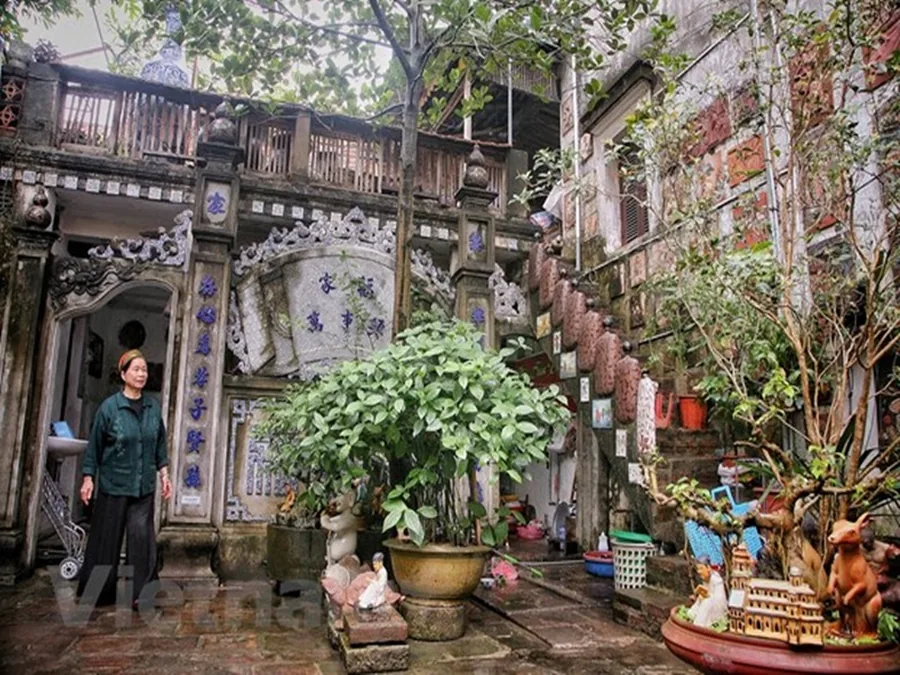
Hanoi's village culture is not a nostalgic checklist of banyan tree, well and communal courtyard. Villages differ in ecology, craft, worship, house form and economic history. What connects them is a social-spatial system of households, communal institutions, lanes and water, production, markets, festivals and local memory. Đường Lâm preserves an unusually legible historic ensemble, while many other villages have been absorbed into the metropolis yet retain communal houses, festivals and social networks.

Key things to understand

  • Read village as a system, not isolated monuments.
  • Use the đình to understand community organization.
  • Notice lanes, ponds and compounds.
  • Compare agricultural, craft and urbanized villages.
  • Treat hương ước critically.
  • See Đường Lâm as exceptional, not universal.
  • Follow village-to-capital flows.
  • Compare old and new houses.
  • Attend festivals as living practice.
  • Respect private homes and workshops.
Meaning

Understand where the tradition comes from

Origins

Where the tradition comes from

Hanoi village culture belongs to the wider northern delta tradition but has unusually dense interaction with a long-lived capital. Villages developed around agriculture, water, kinship, worship, markets and crafts; many later became suburban or urban neighborhoods.

Craft

The material knowledge behind the tradition

Role

Specialized production connects households, village and market.

Capital Link

Craft villages supplied Thang Long and sometimes formed guild communities.

Change

Mechanization, tourism and design reshape production.

Preservation

What must survive for the tradition to continue

Preservation
What
  • Village morphology
  • Communal structures
  • Historic houses
  • Water bodies
  • Craft knowledge
  • Festivals
Challenge
Residents need modern housing and livelihoods.
Principle
A successful village is living and adaptable, not an open-air museum.
Documentation needs
Future risks
Contemporary evolution

How the tradition keeps changing

01

Agriculture declines in some villages.

02

Craft becomes more mechanized and tourism-oriented.

03

New housing changes compounds.

04

Festivals can revive.

05

Creative spaces add economic uses.

06

Digital communication links dispersed residents.

Misconceptions

Common misunderstandings about the tradition

01

A Hanoi village is not defined by a mandatory banyan tree, well and communal courtyard.

02

Village culture is not frozen in a premodern economy.

03

Villages do not share one deity or festival.

04

Urbanized former villages can retain village identity.

05

Craft villages remain production communities, not merely attractions.

06

Đường Lâm is exceptional, not a template.

07

Modern housing does not automatically erase culture, though unmanaged change can damage it.

Connections

Continue exploring

Duong Lam Ancient VillageTraditional houses, communal architecture and village lanes preserve a distinctive Red River Delta settlement landscape.Bat Trang Pottery VillageA centuries-old craft landscape where workshops, kilns, markets and contemporary ceramic design coexist.
Old Quarter Living CultureShops, food, worship and dense neighbourhood life keep the historic core socially active.
Red River CultureThe river remains a geographic and cultural structure behind Hanoi's urban and rural development.
Xu Doai CultureLaterite villages, Ba Vì sacred geography and Sơn Tây traditions create a cultural region distinct from the central core.
Editorial perspective

How to understand this cultural tradition

Why it matters

Hanoi Village Culture interprets the capital's villages as living social landscapes shaped by communal institutions, sacred places, household compounds, agriculture, craft, markets, festivals and urbanization.

What makes it distinctive

A living village system where communal houses, lanes, water, kinship, worship, agriculture, craft, markets and festivals adapt inside a growing metropolis

What visitors often miss

Visible heritage is only one layer; everyday institutions, memory, migration and adaptation carry the deeper culture.

Hanoi Village Culture interprets the capital's villages as living social landscapes shaped by communal institutions, sacred places, household compounds, agriculture, craft, markets, festivals and urbanization.
Editorial misconceptions
  • A Hanoi village is not defined by a mandatory banyan tree, well and communal courtyard.
  • Village culture is not frozen in a premodern economy.
  • Villages do not share one deity or festival.
  • Urbanized former villages can retain village identity.
  • Craft villages remain production communities, not merely attractions.
  • Đường Lâm is exceptional, not a template.
History

A cautious timeline of development

Agricultural settlements consolidate

Villages organize around land, water, kinship and worship.

Village–capital exchange intensifies

Food, crafts, labor and migrants move toward the capital.

Craft and scholarly specializations strengthen

Some villages gain distinctive occupations or learning traditions.

Transport and political change reshape villages

Institutions adapt while communal traditions persist.

Urbanization accelerates

Agricultural land declines and economies diversify.

2005–2006

Đường Lâm gains national recognition

Its village architecture and landscape receive formal protection.

2008

Hanoi expands westward

Large western village landscapes enter the capital.

Village tourism and creative reuse expand

Living heritage increasingly intersects with visitor experiences.

Preservation emphasizes living adaptation

Core structures and spirit are balanced with contemporary needs.

Glossary

Useful cultural terms

Làng

Village as settlement and social-cultural community.

Đình

Communal house associated with tutelary worship and community life.

Thành hoàng

Village tutelary deity.

Hương ước

Village/community conventions.

Cổng làng

Village gate.

Giếng làng

Village well.

Nhà thờ họ

Lineage ancestral house.

Làng nghề

Village with a specialized craft.

Xóm

Hamlet or smaller residential grouping.

Bãi

Alluvial/riverside land important to some village economies.

Questions

Frequently asked questions

What defines Hanoi village culture?

Community institutions, sacred places, kinship, settlement space, economic activity, festivals and local memory.

Is every Hanoi village agricultural?

No; craft, urbanization and services created varied economies.

What is the role of the đình?

Tutelary worship, community ritual and festival organization.

What is hương ước?

Village/community conventions; historical and modern forms differ.

Does every village have banyan, well and communal courtyard?

No; it is cultural shorthand.

Why is Đường Lâm important?

It preserves an unusually legible ensemble of historic village features.

Can village identity survive urbanization?

Yes; names, worship, festivals, lanes and social networks can persist.

How are craft villages different?

They add specialized production and strong market networks.

What changed in 2008?

Large western rural landscapes entered Hanoi's administrative territory, building on older cultural exchange.

How should village heritage be preserved?

Protect key spatial and intangible values while allowing reasonable adaptation and livelihoods.

Sources

Sources for this cultural guide

Hanoi Department of Culture and Sports

Preserving values of Duong Lam Ancient Village

Village gates, wells, communal space and houses

Open source ↗
Hanoi Department of Culture and Sports

Transforming Duong Lam Ancient Village into a Special National Relic

Village ensemble and preservation context

Open source ↗
Hanoi Department of Culture and Sports

Part 5: Making Rural Areas Heritage Regions

House compounds and adaptive preservation

Open source ↗
Hanoi Department of Culture and Sports

Phu Doi communal house – the communal house of ancient Vietnamese villages

Communal-house context

Open source ↗
Hanoi Department of Culture and Sports

Common and separate values in Thang Long – Doai culture

Village/craft exchange with Thang Long

Open source ↗
Hanoi Department of Culture and Sports

Numerous cultural and tourism activities are set to unfold in Duong Lam Ancient Village

Living tourism and creative reuse

Open source ↗