Culture guide

Red River Culture

Red River Culture interprets the river as a formative cultural landscape for Hanoi, connecting ancient wet-rice settlement, flood adaptation, dykes, agriculture, craft villages, trade, local beliefs and modern metropolitan change.

Overview

Meaning, practice and the living system behind the tradition.

The Red River is not simply a scenic edge to Hanoi. Archaeology, village history and contemporary planning show a much deeper relationship: communities settled and farmed the delta, built dykes against flood risk, used river routes for exchange, developed specialized craft settlements and adapted repeatedly as the capital expanded. Official archaeological work at Vuon Chuoi identifies wet-rice communities in the Hanoi area nearly 4,000 years ago, while living riverside communities still preserve village spaces, folk beliefs, markets, crafts and agriculture. This profile treats 'Red River Culture' as an evidence-based cultural-landscape synthesis rather than inventing a single homogeneous river tradition.

Key things to understand

  • Read the dyke as cultural infrastructure, not just flood engineering.
  • Use Vuon Chuoi archaeology to understand the depth of delta settlement without claiming unbroken custom-by-custom continuity.
  • Visit Bat Trang or Kim Lan to see how craft, settlement and river exchange intersect.
  • Compare protected village land with open floodplain and sandbank landscapes.
  • Notice how bridges have transformed cross-river relationships once dependent more heavily on boats and ferries.
  • Look for agriculture outside the dykes as a continuing, not purely historical, river economy.
  • Treat each riverside festival and belief tradition as locally specific.
  • Read urban construction, roads and cultural projects as the newest layer of a continually changing river landscape.
  • Connect environmental resilience with heritage preservation rather than treating them as separate subjects.
  • Avoid romanticizing the river as untouched countryside: it is also infrastructure, metropolitan edge and development frontier.
Meaning

Understand where the tradition comes from

Origins

Where the tradition comes from

The Red River cultural landscape around Hanoi is the cumulative result of long settlement in the delta rather than one event or one ethnic-cultural formula. Archaeological evidence at Vuon Chuoi documents wet-rice communities in the Hanoi area nearly 4,000 years ago, while later villages, dykes, markets, ports, craft production and the capital itself developed through continuing negotiation with river water, fertile alluvium and flood risk.

Meaning

What the tradition expresses

Red River Culture describes how river geography shaped settlement, food production, craft, exchange, village institutions, mobility and the imagination of Hanoi. It is a cultural-landscape concept: the river matters through the practices and settlements linked to it, not because every riverside community shares identical customs.

Cultural landscape

How place and community shape the tradition

River

The Red River is a major geographic spine connecting Hanoi with upstream and downstream regions.

Floodplain

Alluvial land outside or between dykes supports agriculture and seasonal uses but remains exposed to river dynamics.

Dykes

Dykes protect settlements and fields while creating a strong inside/outside-dyke spatial distinction.

Villages

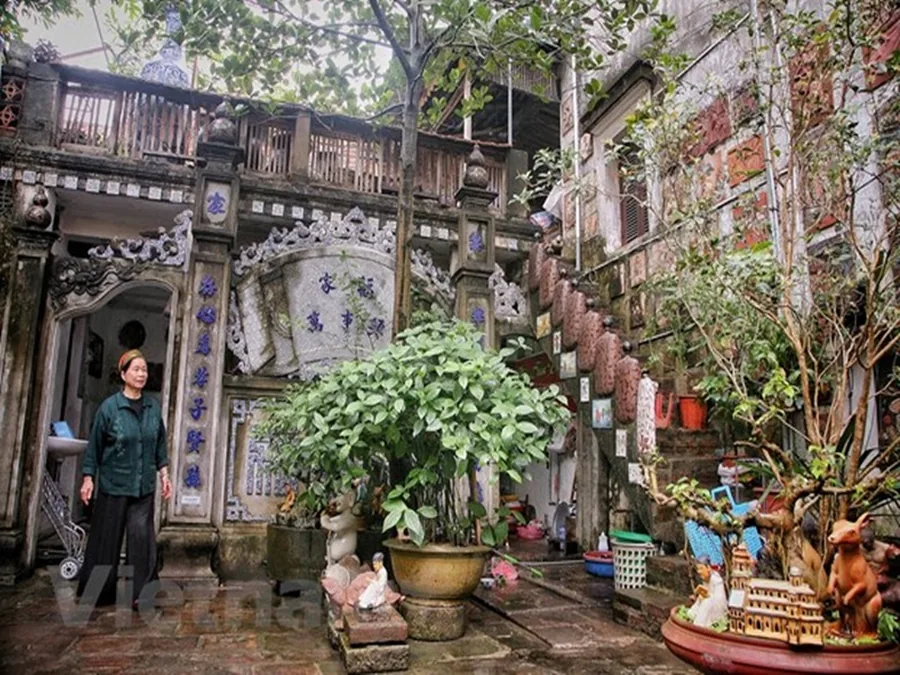
Historic villages cluster along river and distributary landscapes, each with its own craft, worship and local history.

Capital

Thang Long–Hanoi developed within a river-connected delta economy even as modern transport reduced dependence on waterways.

Preservation

What must survive for the tradition to continue

Preservation
What To Preserve
  • Village morphology
  • Communal/religious sites
  • Craft knowledge
  • Agricultural landscapes where viable
  • Historic river connections
  • Archaeological evidence
  • Local festival memory
Challenge
Riverfront development can improve access while also displacing landscape and community practices.
Safety
Flood-control requirements constrain what can be built and preserved outside dykes.
Principle
Preservation should not freeze the river corridor, but development should remain legible to its ecological and cultural history.
Documentation needs
Future risks
Contemporary evolution

How the tradition keeps changing

01

Bridges and roads integrate formerly peripheral riverbanks into the metropolitan core.

02

Traditional agriculture persists alongside services, tourism and urban development.

03

Craft villages increasingly combine production with heritage tourism.

04

City plans envision new cultural, arts and night-economy spaces along the Red River corridor.

05

River tourism concepts are being studied and promoted.

06

Digital and creative programming may reinterpret river heritage for new audiences.

Misconceptions

Common misunderstandings about the tradition

01

Red River Culture is not one uniform folk tradition.

02

The river corridor is not entirely rural or historic.

03

Every riverside village does not share the same craft or ritual.

04

Modern dykes and bridges are part of the cultural landscape, not merely intrusions outside history.

05

The Red River should not be reduced to a scenic backdrop for Hanoi.

06

Alluvial farming remains important in some places but does not define every riverbank area.

07

A planned riverfront cultural zone is not the same thing as inherited river culture.

Connections

Continue exploring

Red RiverThe river shapes settlement, agriculture, flood protection and the capital's long-term urban future.Bat Trang Pottery VillageA centuries-old craft landscape where workshops, kilns, markets and contemporary ceramic design coexist.
Old Quarter Living CultureShops, food, worship and dense neighbourhood life keep the historic core socially active.
Village HanoiAncient villages, communal houses, craft communities and festivals remain fundamental to the capital beyond its urban core.
Thang Long–Hanoi IdentityCourt, village, mercantile, scholarly and modern national layers coexist within one metropolitan culture.
Editorial perspective

How to understand this cultural tradition

Why it matters

The Red River helps explain why Hanoi's settlement, agriculture, craft economy and metropolitan form developed where and how they did.

What makes it distinctive

Few cultural landscapes combine a thousand-year capital with active floodplains, historic dykes, ancient village settlement and major craft communities at this scale.

What visitors often miss

The most important cultural evidence is often ordinary infrastructure and land use—dykes, fields, village lanes and crossings—rather than a single monument.

It is the culture produced by generations of Hanoi communities living with, farming beside, trading along and protecting themselves from the Red River.
Editorial misconceptions
  • It is not one folk religion.
  • It is not only scenery.
  • It is not entirely rural.
  • Every riverside village is different.
  • Modern infrastructure is part of the continuing story.
  • Future riverfront projects should not be confused with inherited tradition.
History

A cautious timeline of development

Wet-rice communities occupy the Hanoi delta

Vuon Chuoi archaeology documents long settlement, burial and craft-production sequences in the Red River Delta.

Delta settlement and exchange intensify

Agriculture, craft and movement develop through river-connected landscapes.

1010 onward

Thang Long becomes the capital

The political center grows within a wider Red River Delta economy and transport environment.

Dyke and village landscapes consolidate

Flood control, cultivation and village settlement increasingly structure the delta around the capital.

Craft and trading villages expand

Riverside communities such as Bat Trang and Kim Lan become important production and exchange nodes.

Bridges and modern transport reorient the river relationship

Road and rail crossings reduce dependence on older ferry and water-route systems.

Metropolitan expansion reaches both banks

Urbanization, infrastructure and new land uses transform riverside settlements and floodplain edges.

2025

Vuon Chuoi receives city-level heritage recognition

Hanoi formally recognizes the archaeological site's significance after major recent excavation and research.

2026

Riverfront cultural and night-economy planning advances

Hanoi plans cultural, arts, tourism and night-economy development linked to the Red River landscape corridor.

Glossary

Useful cultural terms

Sông Hồng

The Red River, the major river running through Hanoi and the northern delta.

Bãi sông

Riverbank or floodplain land exposed to the river's seasonal dynamics.

Phù sa

Alluvial sediment deposited by rivers, historically important to delta agriculture.

Đê

Dyke or levee built to reduce flood risk and protect settlement and farmland.

Ngoài đê

Land on the river side of the dyke, generally more exposed to flooding.

Trong đê

Land on the protected side of the dyke system.

Văn minh lúa nước

Wet-rice agricultural civilization; a broad interpretive concept requiring care when applied across long periods.

Làng ven sông

Riverside village whose settlement and economy are shaped in part by river geography.

Bến

Landing place, wharf or ferry point associated with movement across or along water.

Cảnh quan văn hóa

Cultural landscape: a place shaped through long interaction between communities and their physical environment.

Questions

Frequently asked questions

What is Red River Culture in Hanoi?

A cultural-landscape framework for understanding how the river, floodplain and delta shaped settlement, agriculture, craft, exchange, village life and urban development.

How old is settlement in the Hanoi delta?

Official archaeology at Vuon Chuoi documents wet-rice communities in the Hanoi area nearly 4,000 years ago.

Why are dykes culturally important?

They do more than control floods: they shape settlement, routes, cultivation and the distinction between protected and flood-prone land.

Did the Red River create Hanoi's craft villages?

The river supported exchange and transport, but each craft village has its own history, skills and causes of development.

What does Bat Trang show about river culture?

It demonstrates how a major craft settlement, trade, village heritage and riverside geography can reinforce one another.

Is there one Red River belief system?

No. Riverside communities maintain diverse local beliefs, festivals and sacred places that should be described individually.

Does river transport still dominate Hanoi?

No. Modern road and rail systems dominate metropolitan mobility, though river tourism and riverfront development are being reconsidered.

Why are floodplains important?

They reveal the river's seasonal space and support agriculture, ecology and open landscapes, while also carrying flood risk.

Is Red River culture disappearing?

It is changing: some practices decline, others adapt, while new cultural and tourism uses are being layered onto older landscapes.

How should I explore it?

Combine a river crossing, a craft or village stop, a dyke/floodplain landscape and historical interpretation rather than seeking one single attraction.

What is the biggest preservation issue?

Balancing flood safety, environmental health, metropolitan development and continuity of village, craft and agricultural cultural landscapes.

Sources

Sources for this cultural guide

Hanoi Department of Culture and Sports

Exploring Archaeological Discoveries from Vuon Chuoi at Hanoi Museum

Nearly 4,000-year wet-rice settlement, archaeological continuity and 2025 recognition

Open source ↗
Hanoi Department of Culture and Sports

Early Establishment of the Trade and Cultural Development Zone at the Bat Trang Ancient Village Ecological Museum

Left-bank Red River craft-village landscape, heritage, trade and tourism context

Open source ↗
Hanoi Department of Culture and Sports

Hanoi – The land of hundreds of occupations

Relationship between Thang Long-Hanoi, migration and craft-village development including Red River locations

Open source ↗
Hanoi People's Committee

General Secretary attends Great National Solidarity Festival with residents of Thuong Cat Ward

Current riverside village culture, folk beliefs, festivals, agriculture and rural markets

Open source ↗
Hanoi People's Committee

Hanoi approves night economy development plan through 2030, vision to 2045

2026 Red River landscape-corridor cultural, arts, tourism and river-cruise planning

Open source ↗
Hanoi Department of Culture and Sports

Beauty of Kim Lan pottery

Riverside pottery history and Red River-linked village context

Open source ↗