Culture guide

Hanoi Performance Culture

Hanoi Performance Culture describes the capital's broad ecosystem of live performance, from community and traditional forms to professional theatre, circus, music, dance and technology-rich contemporary productions.

Overview

Meaning, practice and the living system behind the tradition.

Hanoi is both a home of locally rooted performance traditions and a national stage where art forms from across Vietnam are trained, preserved, produced and reinterpreted. The ecosystem ranges from village puppetry and ritual/community arts to chèo, tuồng, ca trù, xẩm, spoken drama, circus, music, dance and hybrid contemporary productions. Professional institutions create regular stages and careers; community practitioners preserve localized repertoire; festivals connect genres; tourism introduces selected forms to new audiences; and current city policy increasingly links cultural preservation with digitization, creative industries and advanced stage technology. This profile deliberately does not reduce Hanoi performance to water puppetry, which has its own canonical cultural profile.

Key things to understand

  • Compare a village/community performance with a purpose-built professional theatre production.
  • Learn the difference among chèo, tuồng, cải lương and spoken drama rather than grouping them as generic 'traditional theatre'.
  • Listen for how voice and percussion organize action, not just melody.
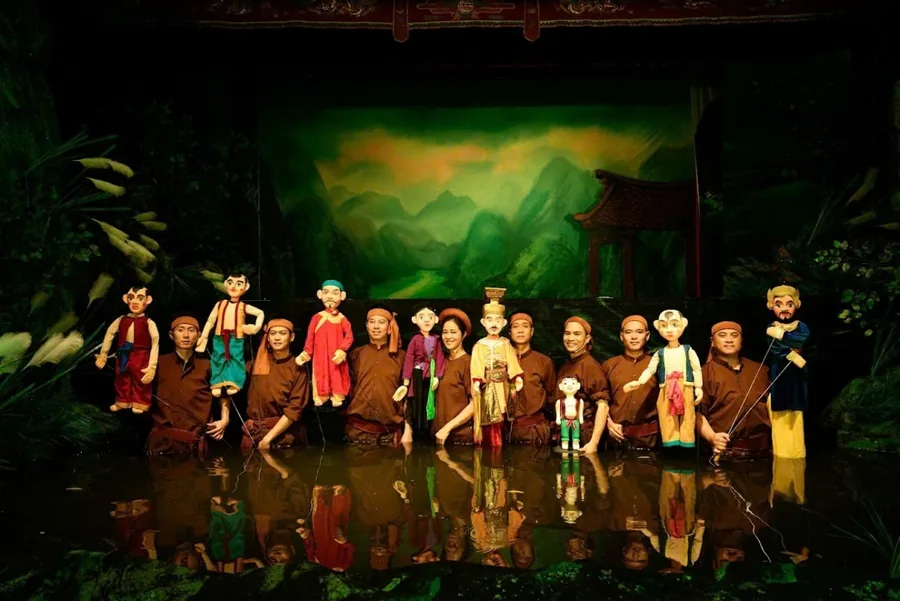
  • Treat water puppetry as one specialized tradition within a much larger performance landscape.
  • Notice how heritage spaces and public squares increasingly become performance venues.
  • Watch how contemporary productions use projection and digital technology without assuming technology defines artistic value.
  • Ask whether a show is community practice, professional repertory, festival work or tourism adaptation.
  • Look for performer training and repertoire transmission behind the visible stage event.
  • Use festivals to sample genres, then seek deeper full-form experiences.
  • Remember that Hanoi presents both locally rooted traditions and national art forms whose origins lie elsewhere in Vietnam.
Meaning

Understand where the tradition comes from

Origins

Where the tradition comes from

Hanoi's performance culture has no single origin. It layers courtly, village, ritual, popular, colonial-modern and contemporary institutions across a metropolitan cultural center. Individual forms such as chèo, ca trù, xẩm, tuồng, water puppetry, ritual music, spoken drama, circus and modern music have distinct histories and should not be collapsed into one invented lineage.

Meaning

What the tradition expresses

Performance in Hanoi is a way the capital stages memory, language, humor, ritual, history and contemporary identity. The ecosystem includes community practitioners, professional public theatres, independent creators, conservatories, festivals, street and heritage programming, and visitor-oriented productions.

Continuity

How the tradition is transmitted and sustained

Professional institutions

How institutions expand access and transmission

Role
Professional theatres create productions, employ artists, preserve repertoire, commission new work and tour.
Genres
Hanoi's institutional landscape encompasses drama, traditional theatre, puppetry, circus, music and dance.
Public Private
The ecosystem includes public institutions as well as private and independent production.
Policy
Current Hanoi cultural policy links performance resources to cultural industries, tourism, human-resource development and international exchange.
Preservation

What must survive for the tradition to continue

Preservation
Core Challenge
Keeping technique, repertoire and practitioner communities alive while attracting new audiences.
City Direction
Current Hanoi policy supports restoration of classic works and melodies, integration of traditional performance with tourism, digitization and human-resource development.
Needs
  • Long-term artist training
  • Repertoire documentation
  • Fair opportunities to perform
  • Youth audience development
  • Community control over local traditions
  • Archival and digital documentation
Risk
  • Aging practitioners
  • Reduced training time
  • Tourism standardization
  • Loss of ritual/community context
  • Venue and funding pressure
Principle
Preservation means sustaining performance capacity, not merely storing costumes, scripts or recordings.
Documentation needs
Future risks
Contemporary evolution

How the tradition keeps changing

01

Traditional forms appear in new heritage and tourism contexts.

02

Professional festivals increasingly bring multiple Vietnamese theatre genres together in Hanoi.

03

Contemporary artists use projection, mapping and hybrid media.

04

Public-space performance has expanded through pedestrian and festival programming.

05

Digital platforms broaden audiences while changing viewing habits.

06

International exchange positions Hanoi performance within wider cultural diplomacy and creative-city networks.

Misconceptions

Common misunderstandings about the tradition

01

Hanoi performance culture is not synonymous with water puppetry.

02

Not every traditional form originated in Hanoi even if it is professionally performed there.

03

Traditional theatre is not one genre; chèo, tuồng, cải lương and other forms have distinct histories and techniques.

04

Community performance is not simply an amateur version of professional theatre.

05

A short tourism excerpt is not the complete repertoire of a traditional form.

06

Modern stage technology does not automatically make a production contemporary in cultural meaning.

07

Traditional performance is not only for older audiences.

08

Festival programs should not be treated as permanent venue schedules.

Connections

Continue exploring

Water PuppetryUrban theatres and village traditions such as Đào Thục keep water puppetry visible as living culture.Thang Long Water Puppet TheatreA highly accessible introduction to northern Vietnamese water-puppetry traditions.
Modern Capital CultureGovernment, universities, galleries, cafés, design and technology make Hanoi simultaneously historical and forward-looking.
Thang Long–Hanoi IdentityCourt, village, mercantile, scholarly and modern national layers coexist within one metropolitan culture.
Editorial perspective

How to understand this cultural tradition

Why it matters

Performance makes Hanoi's cultural identity audible and visible through living artists, institutions, community traditions and new creative production.

What makes it distinctive

The capital concentrates village traditions, national professional institutions and contemporary creative infrastructure in one ecosystem.

What visitors often miss

A famous visitor show is only the front edge of a deeper system of training, repertoire, community transmission, festivals and technical production.

Hanoi is a stage where traditional community arts, professional Vietnamese theatre and contemporary performance meet.
Editorial misconceptions
  • It is not only water puppetry.
  • Not every form performed in Hanoi originated there.
  • Traditional theatre is not one homogeneous genre.
  • Community arts are not simply amateur professional theatre.
  • Technology does not replace technique or repertoire.
  • Tourism shows are not the whole tradition.
History

A cautious timeline of development

Pre-modern periods

Court, village and ritual performance traditions develop

Different performance forms emerge in distinct social, religious and regional contexts that later feed Hanoi's cultural life.

19th–early 20th centuries

Urban audiences and modern entertainment expand

The growing city supports changing forms of public entertainment alongside older community traditions.

20th century

Professional institutions consolidate

Theatres, companies and arts training institutions create formal careers and regular production.

Late 20th century

International touring and visitor performance grow

Forms such as water puppetry gain major international visibility while other genres adapt to new audiences.

21st century

Creative industries and hybrid presentation expand

Festivals, independent work, heritage venues and digital technologies broaden the performance ecology.

2025–2026

Heritage and creativity become more explicitly linked

City cultural programming combines traditional arts with contemporary production and creative-industry goals.

2026

Expanded Hanoi Theater Festival

Official programming brings professional units together across chèo, cải lương, drama, musicals, circus, puppetry and tuồng.

2026

Advanced stage technology enters major heritage festivals

Hanoi plans 3D mapping, augmented and holographic projection alongside live heritage and contemporary performance.

Glossary

Useful cultural terms

Chèo

Northern Vietnamese musical theatre using singing, stylized acting, humor and established dramatic conventions.

Tuồng

Highly stylized Vietnamese classical theatre with codified movement, costume and makeup.

Cải lương

Vietnamese reformed theatre, historically associated especially with southern Vietnam.

Ca trù

Specialized Vietnamese vocal-poetic performance tradition with instrumental accompaniment.

Xẩm

Narrative folk singing historically associated with itinerant performers and public spaces.

Múa rối

Puppetry; includes multiple forms, of which water puppetry is one.

Sân khấu

Stage or theatre; also used broadly for performing arts.

Tiết mục

Individual performance item or number.

Vở diễn

A complete staged production or play.

Nghệ nhân

Recognized practitioner preserving specialized traditional cultural knowledge.

Questions

Frequently asked questions

What does Hanoi performance culture include?

Traditional and modern theatre, puppetry, music, dance, circus, ritual/community performance, festivals and contemporary hybrid stage work.

Is water puppetry the main Hanoi performing art?

It is one of the most internationally visible forms, but Hanoi's performance ecosystem is much broader and water puppetry has its own dedicated profile.

Did all these art forms originate in Hanoi?

No. Hanoi is a national cultural center where locally rooted and wider Vietnamese forms coexist.

What is the difference between community and professional performance?

Community traditions may be tied to local guilds, festivals or ritual life, while professional institutions provide formal employment, regular production and purpose-built stages.

Which traditional theatre forms can appear in Hanoi?

Current official festival programming includes chèo, tuồng, cải lương, puppetry and other forms alongside spoken drama, musicals and circus.

Can visitors enjoy performances without Vietnamese?

Often yes at a basic level, especially visually strong forms, but translated context can greatly improve understanding.

Why are festivals important?

They bring genres and institutions together, create audiences, encourage exchange and reveal current artistic priorities.

How is technology changing performance?

Lighting, sound, projection, 3D mapping, VR/AR and digital distribution expand production and interpretation possibilities.

Does tourism help preserve traditional arts?

It can provide audiences and income, but overly standardized short programs can reduce repertoire and community context.

What should I see first?

Choose based on interest: water puppetry for accessible visual theatre, a traditional stage genre for deeper theatrical language, or a contemporary festival/program for current creative practice.

What is the key preservation issue?

Maintaining skilled practitioners, training, repertoire and meaningful performance opportunities across generations.

Sources

Sources for this cultural guide

Hanoi People's Committee

Hanoi to host expanded Hanoi Theater Festival in 2026

Current professional ecosystem, participating genres and 2026 festival context

Open source ↗
Hanoi People's Committee

Hanoi implements Politburo resolution on development of Vietnamese culture

Digitization, restoration of traditional repertoire, tourism integration and human-resource policy

Open source ↗
Hanoi People's Committee

Hanoi to host 2nd Thang Long - Hanoi festival celebrating heritage and creativity

2026 heritage/contemporary programming and advanced stage technology

Open source ↗
Hanoi Department of Culture and Sports

Hoan Kiem District Honors Groups and Individuals Contributing to Heritage Preservation

Ca tru, xam, hat van and intangible-performance preservation in central Hanoi

Open source ↗
Hanoi People's Committee

Hanoi Tourism Welcomes 2026 – Get on Hanoi program launched

Current integration of performing arts with cultural and experiential tourism

Open source ↗