Craft village guide

Ha Thai Lacquer Village

Ha Thai Lacquer Village is one of Hanoi's recognized traditional craft villages, with more than two centuries of lacquer practice. Its makers combine inherited lacquer knowledge with modern materials and designs, producing paintings, boxes, trays, vases, interior objects and export-oriented decorative goods.

Overview

Understand the craft before deciding what to watch, try and buy.

Hạ Thái is a major lacquer-making community south of central Ha Noi. Hanoi's cultural authority describes more than 200 years of craft history, beginning with traditional painted lacquer work and later developing a distinctive lacquerware identity. The process is slow and sequential: bases are prepared, coated, dried, sanded and decorated through multiple stages, with surface finishing determining both appearance and durability. A Hanoi cultural source describes a traditional production cycle of roughly 16 stages over about 60 days, while also noting that contemporary workshops may use industrial coatings and newer substrates alongside older lacquer practices. That distinction matters for visitors and buyers: 'Hạ Thái lacquer' today is a living production ecosystem, not one single immutable recipe. The village is increasingly integrated into Hanoi's craft-tourism and creative-design programs, including the 2025 South Thăng Long heritage route and 2026 Re:Craft initiative.

Key things to understand

  • Understand lacquer as a built surface: repeated coating, drying, sanding and polishing matter as much as final decoration.
  • Ask whether a product uses traditional natural lacquer, industrial coating, or a hybrid system rather than assuming all 'sơn mài' is chemically identical.
  • Look at unfinished pieces to understand how much labor disappears beneath the glossy final surface.
  • Compare painting panels with functional objects such as trays, boxes and vases to see how the same surface knowledge adapts to different forms.
  • Decoration may combine painting with eggshell, shell, metallic leaf or other materials depending on workshop and product.
  • Humidity, drying conditions and patience are integral to traditional lacquer processes; stages cannot simply be rushed.
  • Contemporary Hạ Thái is both heritage and manufacturing community, with domestic and export markets influencing design.
  • Recent Hanoi programs connect Hạ Thái artisans with designers and students, showing that innovation is an active part of craft continuity.
  • Buy by inspecting flatness, edge finishing, polish, surface defects and transparency about materials.
  • Treat workshop safety seriously: coatings, solvents, dust and polishing processes require controlled handling.
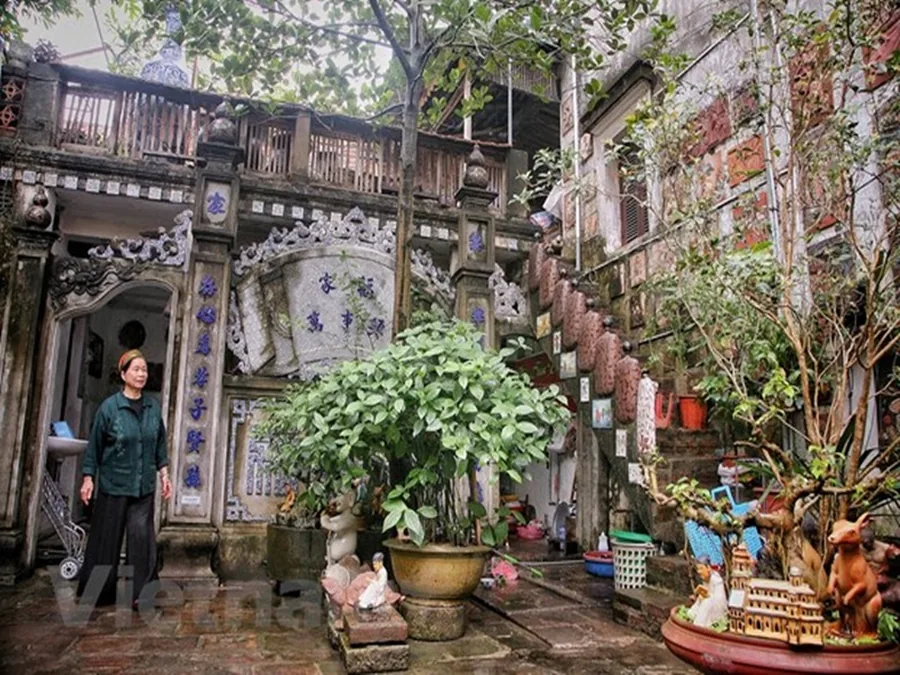
Craft identity

A living production community

Craft identity

A village built around making

Craft
Lacquerware / sơn mài
Craft Family
Layered surface finishing and decorative arts
Character
Recognized traditional craft village with active household and enterprise production
Historical Depth
More than 200 years according to Hanoi cultural authority
Distinctive Value
Long, layered production converts ordinary bases into durable decorative surfaces through repeated coating, sanding, decoration and polishing.
Visitor Lens
Read the object from substrate outward: base → ground → coating layers → decoration → polishing.
Craft ecosystem

More than one workshop or one product

How it is made

Follow the craft from raw material to finished object

01

Choose form and substrate such as wood or other prepared bases according to product type.

02

Stabilize, smooth and prepare the substrate before surface building.

03

Apply preparatory layers appropriate to the chosen lacquer system.

04

Allow layers to set under suitable conditions; timing varies with material system and weather.

05

Level the surface between stages to remove irregularities and prepare for later coats.

06

Build multiple surface layers rather than relying on one thick application.

07

Add painted imagery, color fields, inlay or other decorative materials according to design.

08

Decorative elements may be integrated beneath subsequent layers depending on technique.

09

Carefully reveal and level decorative layers without damaging the intended image.

10

Develop the final sheen and depth, then inspect edges and surface consistency.

11

Check cracking, pinholes, uneven gloss, dust inclusions, edges and structural stability.

Products & forms

Know what you are looking at before you buy

Lacquer paintings

Boxes and containers

Trays and table objects

Vases and sculptural forms

Interior accessories

Custom/export products

Quality & use

Judge workmanship by purpose, finish and provenance

Quality guide

Judge workmanship by purpose, finish and intent

Good Signs
  • Even, well-leveled surface
  • Clean edges and corners
  • Intentional depth in layered decoration
  • Consistent polish appropriate to design
  • No obvious cracking or lifting
  • Stable substrate
Warning Signs
  • Cracks
  • Bubbles or pinholes
  • Peeling
  • Rough edges
  • Uneven uncontrolled gloss
  • Strong claims about natural lacquer without material disclosure
Buying Question
Ask what coating system, substrate and decorative technique were used and how the piece should be maintained.
Makers & workshops

Learn from makers without turning work into performance

Workshops

What visitors can realistically do

Artisan knowledge

Skill lives in people, not only objects

Skills
  • Surface diagnosis
  • Layer timing
  • Sanding control
  • Color and composition
  • Polishing
  • Material compatibility
  • Quality control
Transmission
Family/workshop transmission supplemented by associations, design collaboration and public craft programs.
Historic Context
Hanoi cultural sources credit Đinh Văn Thành, associated with the École des Beaux-Arts de l'Indochine, with helping elevate lacquer painting practice in Hạ Thái.
Market & trade

Understand how making, selling and demand connect

Market

Understand how the craft reaches buyers

Historic
Hạ Thái developed from traditional painted lacquer work into a broader lacquerware center.
Cooperative
A 1955 cooperative is recorded in Hanoi cultural history, with later market disruptions and household-scale recovery.
Export
Hanoi sources document long-running overseas markets; current official local information continues to describe international reach.
Contemporary
Products serve décor, gifts, export, OCOP/craft promotion and design collaborations.
Risk
Market labels can blur distinctions between natural lacquer, industrial coatings and mixed systems.
Workshop vs shop

Know where the object is coming from

Workshop
Allows visitors to see unfinished surfaces, sanding, decoration and material choices.
Shop
Shows final polish but may not reveal production origin or coating system.
Best Practice
Ask for workshop attribution, substrate and coating description.
Visitor Value
Unfinished pieces are the clearest way to understand layered production.
Buying

Choose and transport craft objects with fewer surprises

Before buying

Check the object, not only the price

Living heritage

Craft, community and change

Village landscape

The craft sits inside a living settlement

Character
Working craft community south of central Ha Noi, now within Hồng Vân commune under the post-2025 administrative structure.
Tourism
Hạ Thái is included in Hanoi's South Thăng Long Heritage Road tourism product and local community-tourism initiatives.
Experience
Production spaces remain workplaces and homes, not a continuous open-air museum.
Nearby Context
The southern-Hanoi route links craft, village heritage and other cultural stops.
Heritage & innovation

Tradition continues by changing

Heritage
  • Layered surface craft
  • Sanding and polishing knowledge
  • Decorative painting
  • Workshop transmission
Innovation
  • Industrial coating systems
  • New substrates
  • Contemporary product design
  • Designer collaboration
  • Export adaptation
Recent Program
Hạ Thái participated in Hanoi's 2026 Re:Craft summer design initiative linking artisans with interdisciplinary student teams.
Balance
Innovation should be documented rather than hidden behind a generic 'traditional lacquer' label.
Environment

Production has material impacts

Issues
  • Solvent and coating emissions
  • Sanding dust
  • Wastewater/cleaning residues
  • Solid waste and used containers
  • Worker exposure
Context
Hanoi environmental reporting has identified craft-village air pollution as a citywide issue and has specifically discussed expanding lacquer production at Hạ Thái.
Positive Directions
  • Ventilation and capture
  • Safer material substitution where technically suitable
  • Dust control
  • Waste segregation
  • Proper hazardous-waste handling
  • Cleaner production
Visitor Role
Do not enter spraying/coating zones without permission and do not romanticize unsafe working conditions.
Visit responsibly

Photography, families, access and workshop etiquette

Community etiquette
  • Arrange workshop visits where possible.
  • Ask before entering household production spaces.
  • Do not touch wet, curing or freshly polished surfaces.
  • Respect PPE and ventilation restrictions.
  • Ask before photographing workers.
  • Keep children away from coating, solvent and sanding areas.
  • Do not demand proprietary formulas.
  • Buy directly when possible and ask makers to explain material choices.
Photography
Best Subjects
  • Layered work in progress
  • Sanding textures
  • Eggshell/shell or metallic details where used
  • Polished reflections
  • Hands at decoration stages
Permission
Ask before photographing private workshops and people.
Safety
Never move barriers or enter coating areas for a better angle.
Commercial
Arrange commercial shoots with the host and local organizer.
Family use
Fit
High when hosted safely
Strengths
  • Color
  • Decorative motifs
  • Simple prepared-object activity
  • Strong before/after transformation
Safety
Children should not participate in solvent/coating or powered sanding stages.
Strategy
Use a pre-prepared blank for decoration while the host explains the full multi-stage process.
Accessibility
Terrain
Village and private workshop access varies; thresholds and narrow workspaces may occur.
Planning
Confirm the selected tourism/workshop point for step-free access.
Chemical Sensitivity
Visitors sensitive to odors or solvents should ask what processes will be active.
Routes

Choose a craft-village visit that matches your interest

1.5–2 hoursFirst-time visitors

  1. Craft history
  2. Unfinished bases
  3. Layering/sanding demonstration
  4. Decoration
  5. Finished products
2–3 hoursFamilies and students

  1. Process briefing
  2. Material examples
  3. Decorate prepared object
  4. Polish/finish explanation
  5. Shopping
3–4 hoursDesign and craft professionals

  1. Traditional vs modern coatings
  2. Substrates
  3. Layer building
  4. Inlay/decoration
  5. Quality control
  6. Artisan discussion
Who it suits

Match this craft village to your travel style

Craft traveler

Very high

The long process reveals sophisticated surface knowledge.

Art/design student

Very high

Strong links between material science, image making and product design.

Shopper

High

Wide functional and decorative range, provided materials are disclosed.

Family

High with hosted activity

Prepared-object decoration is engaging while hazardous stages can be avoided.

Photographer

High

Gloss, layering and workshop processes are visually distinctive.

Misconceptions

What visitors often misunderstand

01

Not every Hạ Thái product uses the same lacquer chemistry.

02

'Sơn mài' is a layered process, not simply painting one glossy coat.

03

The full process cannot be reproduced in a one-hour tourist workshop.

04

A glossy surface alone does not prove high quality.

05

Food-contact suitability cannot be inferred from a lacquer object's appearance.

06

Modern materials do not automatically mean the village has abandoned heritage; material change is part of its contemporary history.

Plan your visit

Location, access, timing and facilities

Location
Area

Hạ Thái, Hồng Vân commune, Ha Noi, Vietnam

Getting there
Taxi / ride-hailing

Convenient for a booked workshop south of central Ha Noi.

Private vehicle

Useful for the South Thăng Long craft and heritage route.

Tour / arranged transfer

Recommended for groups and hands-on programs.

Visitor information
Opening Hours
No single village-wide schedule; confirm the selected workshop or tourism point
Standard Admission
No universal village ticket; hosted experiences may charge separately
Typical Duration
1.5–3 hours
Booking
Recommended; essential for groups and hands-on sessions
Best time
Morning or afternoon by appointment

Best for process observation

Ask which coating/sanding stages will be active.
Dry, mild weather

Comfortable for walking between workshops

Production itself continues year-round according to 2026 local reporting.
Facilities
Craft workshopsDistributed across the village
Community tourismActively promoted by Hồng Vân commune
Hands-on experiencesAvailable through selected hosts/programs
ShoppingWorkshop and local products
Design collaborationActive in recent Hanoi creative programs
Useful tips
  • Book a host who can show multiple production stages.
  • Ask what coating system is used.
  • Avoid active spraying/solvent zones unless the host confirms safe access.
  • Do not touch curing pieces.
  • Use current Hồng Vân navigation rather than relying only on older Thường Tín addresses.
  • For purchases, ask about intended use and care.
Connections

Continue exploring

Quang Phu Cau Incense VillageBundles of drying incense create a visually distinctive craft landscape southwest of central Hanoi.
Van Phuc Silk VillageA famous weaving community where silk production and retail remain central to local identity.
Chang Son Fan VillageA western Hanoi village preserving decorative and practical fan-making skills.
Bat Trang Pottery VillageA centuries-old craft landscape where workshops, kilns, markets and contemporary ceramic design coexist.
Editorial perspective

How to understand this craft village

Why it matters

Hạ Thái demonstrates how a traditional Vietnamese surface craft survives through patient technical knowledge, export production and contemporary design adaptation.

What makes it distinctive

The finished glossy object conceals a long sequence of ground preparation, repeated layers, sanding, decoration and polishing.

What visitors often miss

Contemporary Hạ Thái uses multiple coating systems; 'traditional lacquer village' describes a living lineage, not one uniform recipe.

A historic Hanoi lacquer village where artisans build decorative surfaces layer by layer, then sand and polish them to depth and sheen.
History

How the craft and village evolved

Lacquer craft tradition develops

Hanoi cultural authorities describe Hạ Thái's lacquer tradition as more than two centuries old.

1955

Bình Minh cooperative established

A Hanoi cultural history records the establishment of a cooperative that organized hundreds of craft workers.

2001

Craft-village recognition

Official Hanoi listings record Hạ Thái lacquer village as recognized in 2001.

2003

Craft association develops

Hanoi cultural reporting records formation of a Hạ Thái lacquer craft association structure.

2025

South Thăng Long Heritage Road launched

Hanoi tourism authorities include Hạ Thái in a new southern-Hanoi craft and heritage tourism route.

2026

Re:Craft creative collaboration

Hạ Thái joins Hanoi's Re:Craft program connecting traditional villages with interdisciplinary design students and artisans.

Glossary

Useful craft terms

Sơn mài

Vietnamese lacquer practice based on layered surface building, decoration, sanding and polishing; exact materials vary.

Lacquerware

Object whose surface is finished through lacquer or lacquer-like coating systems.

Substrate

Underlying object or base on which surface layers are built.

Ground layer

Preparatory layer used to stabilize and level a surface before later coats.

Sanding

Controlled abrasion used to level layers and reveal decorative effects.

Polishing

Finishing process that develops smoothness, sheen and optical depth.

Eggshell inlay

Decorative use of eggshell fragments embedded into a surface where employed.

Curing

Process by which a coating hardens or sets; mechanism depends on material system.

Industrial coating

Modern manufactured coating system that may differ chemically and technically from traditional natural lacquer.

Living heritage

Craft knowledge sustained and adapted by practicing communities.

Questions

Frequently asked questions

How old is Hạ Thái lacquer craft?

Hanoi's cultural authority describes the village tradition as more than 200 years old.

When was Hạ Thái officially recognized as a craft village?

Hanoi's official listing records recognition in 2001.

How long does lacquerware take to make?

A Hanoi cultural account describes about 16 stages over roughly 60 days for a traditional production cycle, but timing varies by product and material system.

Does every workshop use natural lacquer?

No. Official Hanoi material notes that contemporary makers also use industrial coatings and new substrates.

What products are made?

Paintings, boxes, trays, vases, interior décor, gifts and custom/export products.

Can I join a workshop?

Craft-tourism activities are developing, but book a specific host because access and activities vary.

Is lacquerware food safe?

Do not assume so. Ask the maker for the intended use and product-specific material/compliance information.

What should I check before buying?

Surface evenness, edges, substrate stability, decoration quality and transparent material information.

Where is Hạ Thái now administratively?

Current 2026 local-government information places Hạ Thái within Hồng Vân commune, Ha Noi; older sources use Duyên Thái, former Thường Tín district.

Is Hạ Thái part of a tourism route?

Yes. Hanoi launched the South Thăng Long Heritage Road craft-tourism product in 2025 including Hạ Thái.

What is the most important visitor safety point?

Respect workshop controls around coatings, solvents, sanding dust and curing pieces.

Sources

Where this guide comes from

Hanoi Department of Culture and Sports

Làng nghề sơn mài Hạ Thái

History, 200+ years, process, 16 stages/60 days, cooperative/association, material adaptation and markets

Open source ↗
Hanoi Department of Culture and Sports

Danh mục phố cổ, làng cổ, làng nghề truyền thống

Official recognition of Hạ Thái as a traditional craft village

Open source ↗
Hanoi People's Council / Department of Culture and Sports

Official craft-village appendix

Official listing showing Hạ Thái lacquer village and 2001 recognition

Open source ↗
Hồng Vân Commune, Ha Noi

Làng Sơn mài Hạ Thái tất bật đơn hàng từ đầu năm

Current 2026 production and locality context

Open source ↗
Hồng Vân Commune, Ha Noi

Hạ Thái at Hanoi Creative Design Festival 2026

Current product range and creative-design collaboration

Open source ↗
Hanoi Department of Culture and Sports

Re:Craft 2026 – Làng nghề tái sinh

2026 artisan/design collaboration

Open source ↗
Đại Thanh Commune, Ha Noi

Con đường Di sản Nam Thăng Long, Hà Nội – Tinh hoa làng nghề Việt

2025 craft-tourism route including Hạ Thái

Open source ↗
Hồng Vân Commune, Ha Noi

Community tourism and civilized visitor conduct conference

Community-tourism development at Hạ Thái

Open source ↗