Culture guide

Hanoi Food Culture

Hanoi Food Culture is the living system behind the capital's meals: street and market eating, household cooking, ritual feasts, craft-village specialties, tea and coffee, seasonal foods, culinary heritage and contemporary creative adaptation.

Overview

Meaning, practice and the living system behind the tradition.

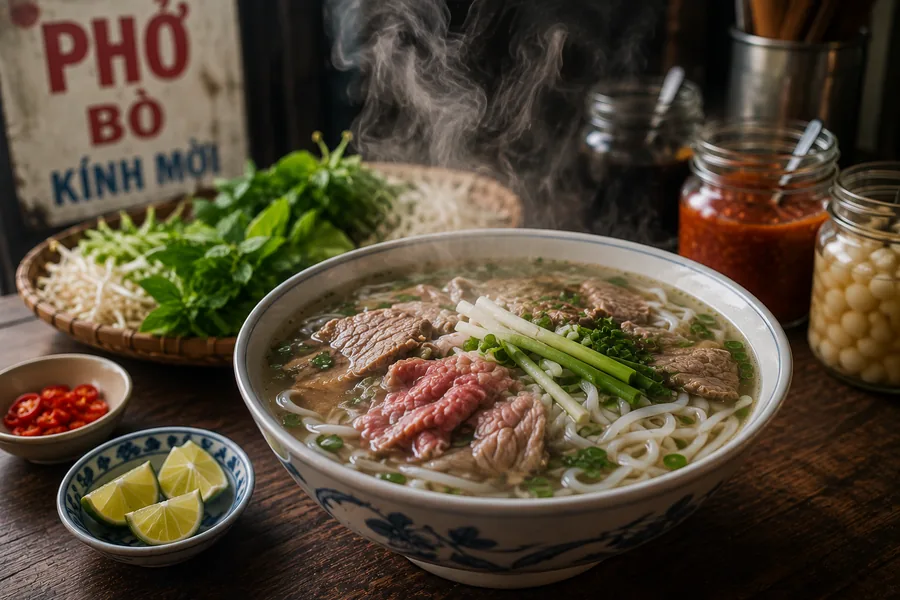
Hanoi's food culture is broader than a checklist of famous dishes. It grew from Thang Long–Hanoi's role as a political and trading center and from the exchange between the historic urban core, surrounding agricultural and craft communities, and later the wider cultural geography of expanded Hanoi. Phở, bún chả and chả cá are internationally visible, but the cultural system also includes rice rolls, sticky rice, green rice flakes, lotus tea, ceremonial feasts, market breakfasts, family altars, pavement cafés and new creative restaurants. City cultural authorities increasingly treat cuisine as both living intangible heritage and a resource for cultural industries, while preservation still depends on practitioners, ingredients, households and viable local economies.

Key things to understand

  • Start with breakfast to see food as routine rather than spectacle.
  • Trace rice through phở noodles, bánh cuốn, xôi and cốm.
  • Compare a market or pavement meal with a more formal restaurant version.
  • Look for the village or neighborhood behind a specialty.
  • Notice how autumn foods such as cốm carry strong seasonal memory.
  • Treat tea and coffee spaces as part of urban social culture.
  • Ask how a dish is prepared; technique is often the real heritage.
  • Distinguish nationally recognized culinary practices from generic use of the same dish name.
  • Explore beyond the Old Quarter to understand expanded Hanoi's culinary diversity.
  • Read contemporary innovation as a living layer, not automatically as loss of tradition.
Meaning

Understand where the tradition comes from

Origins

Where the tradition comes from

Hanoi food culture developed through the long history of Thang Long–Hanoi as a political, commercial and migration center. Courtly demand, guild streets, markets, surrounding agricultural villages and migrants from other regions all contributed. It should not be reduced to one fixed 'royal' cuisine or to the Old Quarter alone.

Meaning

What the tradition expresses

Food in Hanoi is a social language of season, neighborhood, family memory, hospitality, worship, trade and urban routine. Everyday breakfasts, market snacks, family meals, ceremonial trays, tea, sweets and restaurant traditions together form the culture.

Experience well

Experience it respectfully and notice more

Visitor etiquette

Experience it respectfully

  • Observe how condiments are used before adding large amounts.
  • Share table space politely in small shops.
  • Ask before photographing cooks at close range.
  • Do not block narrow pavements or service areas.
  • Treat family or ritual food practices respectfully.
  • Use current food-safety judgment rather than assuming heritage status guarantees hygiene.
What to notice

Notice what gives the tradition its character

  • Broth clarity and aroma in noodle dishes.
  • Char and smoke in grilled foods.
  • Balance between herbs, pickles and dipping sauce.
  • Rice processing across noodles, sheets, sticky rice and cốm.
  • Seasonal ingredients and festival timing.
  • Small specialized menus that reflect deep repetition.
  • The relationship between food and particular villages or streets.
  • How contemporary cafés reinterpret older urban social habits.
Learning to experience

A better way to experience the tradition

01

Identify the food's setting

Street, market, home, ritual and restaurant contexts carry different meanings.

02

Ask what is locally made

Provenance helps distinguish a Hanoi-linked practice from a generic menu item.

03

Observe technique

Preparation knowledge is central to intangible heritage.

04

Taste before heavily seasoning

It helps reveal the cook's intended balance.

05

Connect dish to season or occasion

Timing often explains cultural significance.

06

Compare versions carefully

Variation is evidence of living culture, not necessarily error.

Visitor experience

What first-time visitors should expect

First show
Language
Menus and ordering practices vary; translation tools help but observation is also useful.
Pace
Multiple small tastings reveal more than one large meal.
Safety
Choose operators with appropriate hygiene, fresh turnover and food handling; allergies require explicit communication.
Best for
  • Food-focused travelers
  • Cultural travelers
  • Families comfortable with shared tasting
  • Photographers interested in markets and street life
  • Researchers of intangible heritage
Preservation

What must survive for the tradition to continue

Preservation
Core Challenge
Culinary heritage survives only when people continue to cook, teach, source ingredients and find viable markets.
Documentation
Record recipes, techniques, oral histories, ingredient knowledge and ritual contexts.
Livelihood
Recognition is more sustainable when practitioners gain income and status.
Adaptation
Packaging, tourism and new presentation can support continuity if core knowledge remains legible.
Risk
  • Loss of skilled practitioners
  • Ingredient substitution
  • Commercial standardization
  • Rising rents
  • Food-safety pressures
  • Overtourism around a few famous dishes
Documentation needs
Future risks
Contemporary evolution

How the tradition keeps changing

01

Delivery apps and social media change discovery and consumption.

02

Chefs reinterpret traditional flavors in contemporary restaurants.

03

Food festivals turn culinary heritage into public cultural programming.

04

Packaging and gift formats help village specialties reach wider markets.

05

Tourism increases demand for accessible explanations and tasting experiences.

06

Food-safety, waste and sustainability expectations increasingly shape production.

Misconceptions

Common misunderstandings about the tradition

01

Hanoi cuisine is not only phở and bún chả.

02

Street food is not the whole culinary culture.

03

There is no single fixed 'authentic Hanoi taste' shared by every household.

04

A national heritage inscription protects cultural knowledge; it does not certify every seller using the dish name.

05

Old Quarter cuisine is important but expanded Hanoi includes strong village and Xu Doai contributions.

06

Contemporary adaptation does not automatically make a dish inauthentic.

07

Famous origin stories should be attributed rather than repeated as fact.

Connections

Continue exploring

Hanoi PhoClear aromatic broth, rice noodles and carefully balanced garnishes define Hanoi's most globally recognised dish.
Hanoi Food CulturePhở, bún chả, chả cá, bánh cuốn, cốm and coffee are embedded in neighbourhood life rather than existing only as tourist dishes.
Old Quarter Living CultureShops, food, worship and dense neighbourhood life keep the historic core socially active.
Village HanoiAncient villages, communal houses, craft communities and festivals remain fundamental to the capital beyond its urban core.
Xu Doai CultureLaterite villages, Ba Vì sacred geography and Sơn Tây traditions create a cultural region distinct from the central core.
Editorial perspective

How to understand this cultural tradition

Why it matters

Food makes Hanoi's cultural history edible: trade, agriculture, family memory, ritual, craft knowledge and contemporary urban life meet in everyday meals.

What makes it distinctive

The strength lies less in one flavor formula than in dense connections among specialized dishes, markets, villages, seasons, streets and social rituals.

What visitors often miss

Famous dishes are endpoints of larger systems involving rice processing, ingredient supply, household knowledge, craft villages and neighborhood economies.

Hanoi food culture is the way the capital turns rice, markets, villages, family memory and street life into a living culinary identity.
Editorial misconceptions
  • Hanoi cuisine is not only phở and bún chả.
  • Street food is not the whole culinary culture.
  • There is no single fixed 'authentic Hanoi taste' shared by every household.
  • A national heritage inscription protects cultural knowledge; it does not certify every seller using the dish name.
  • Old Quarter cuisine is important but expanded Hanoi includes strong village and Xu Doai contributions.
  • Contemporary adaptation does not automatically make a dish inauthentic.
  • Famous origin stories should be attributed rather than repeated as fact.
History

A cautious timeline of development

Historic Thang Long period

Capital and market networks shape cuisine

Court, markets, guild streets and surrounding villages create demand and exchange around specialized foods.

19th–20th centuries

Urban specialty foods become closely tied to streets and families

Commercial addresses and neighborhood reputations become part of culinary memory.

20th century

Migration and political-economic change reshape eating

Recipes, supply systems and restaurant forms adapt through war, subsidy years, reform and urban growth.

1986 onward

Đổi Mới expands commercial food culture

Private food businesses, restaurants and later tourism broaden public culinary life.

2014 onward

Hanoi inventories culinary intangible heritage

City cultural authorities report systematic identification of hundreds of culinary heritage elements.

2022 onward

Cuisine becomes explicit cultural-industry resource

Hanoi's cultural-industry strategy treats cuisine as a field for heritage-based economic development.

2025

Food and Culture Festival foregrounds living heritage

The city presents artisan knowledge, demonstrations and culinary creativity as part of contemporary cultural development.

2025

Cha Ca La Vong knowledge receives national-list recognition

The Ministry's decision is announced at the Hanoi Food and Culture Festival, adding another highly visible culinary practice to the city's recognized heritage.

Glossary

Useful cultural terms

Ẩm thực Hà Nội

Hanoi cuisine or food culture.

Cốm

Young green rice, strongly associated with Hanoi's autumn food culture.

Phở

Rice-noodle soup with multiple regional and stylistic traditions; Hanoi phở has its own recognized heritage context.

Bún chả

Grilled pork served with rice vermicelli, herbs and dipping sauce.

Chả cá

Fish preparation associated in Hanoi with turmeric, dill and table-side cooking.

Cỗ

Ceremonial or feast meal composed of multiple dishes for a ritual or communal occasion.

Quà Hà Nội

A broad cultural idea of Hanoi snacks, seasonal delicacies or edible gifts.

Hàng quán

Small food and drink businesses, often central to street-level urban eating.

Di sản văn hóa phi vật thể

Intangible cultural heritage: living knowledge, skills, practices and expressions transmitted by communities.

Questions

Frequently asked questions

What defines Hanoi food culture?

A combination of urban street and shop eating, household meals, markets, craft-village specialties, seasonal foods, ritual cooking and contemporary café and restaurant culture.

Which dishes are most associated with Hanoi?

Phở, bún chả, chả cá, bánh cuốn, xôi, cốm and lotus-scented tea are among the best-known, but the city's repertoire is much broader.

Is Hanoi cuisine only Old Quarter cuisine?

No. The historic core is influential, but the capital's food culture also includes suburban and rural craft communities and the wider cultural geography of expanded Hanoi.

Is Hanoi food generally mild?

That is an oversimplification. Many dishes emphasize balance and aromatic clarity, but flavor intensity varies by dish, cook and condiment use.

What is the role of street food?

It is a major everyday and visitor-facing expression of specialized cooking, but household and ritual food traditions are equally important culturally.

What does intangible-heritage recognition mean for food?

It recognizes knowledge, skills and community practice associated with preparing and transmitting a culinary tradition.

When is a good season for food exploration?

Every season has strengths; autumn is especially associated with cốm and other seasonal imagery, while cooler months favor hot soups and grilled foods.

How should visitors choose food safely?

Use ordinary food-safety judgment: look for clean handling, high turnover, appropriate storage and clear allergy communication.

Are modern reinterpretations part of Hanoi food culture?

Yes, when understood as contemporary evolution rather than automatically presented as unchanged tradition.

How can I learn more than just tasting?

Visit markets, observe preparation, seek demonstrations by practitioners and connect dishes to their villages, streets, seasons and rituals.

Is there one official list of 'Hanoi dishes'?

No single list captures the entire cuisine. Heritage inventories and national inscriptions document specific practices, while everyday food culture remains much broader.

Sources

Sources for this cultural guide

Ha Noi Department of Culture and Sports

Hanoi Cuisine: From Heritage to a Resource for the Cultural Industry

Current heritage inventory, cultural-industry framing and expanded-Hanoi culinary context

Open source ↗
Ha Noi Department of Culture and Sports

Hanoi Food and Culture Festival 2025: A Heritage Journey Alive Amid Contemporary Life

Living-heritage framing and current national-list recognition context

Open source ↗
Ha Noi Portal

Opening of Hanoi Food and Culture Festival 2025

Official city framing of culinary diversity, heritage inventory and current festival role

Open source ↗
Vietnam National Authority of Tourism

Ha Noi Food Guide: The best street food dishes to sample

Official visitor-facing street-food context and representative dishes

Open source ↗
Vietnam National Authority of Tourism

The street food bible: From Michelin stars to sidewalk stools

Current national-tourism framing of Hanoi street food and northern culinary profile

Open source ↗