Experience guide

Read Hanoi's Deep History at Co Loa

Walk selected sections of the citadel landscape and use museum or local interpretation to understand the scale and significance of the earthen fortifications.

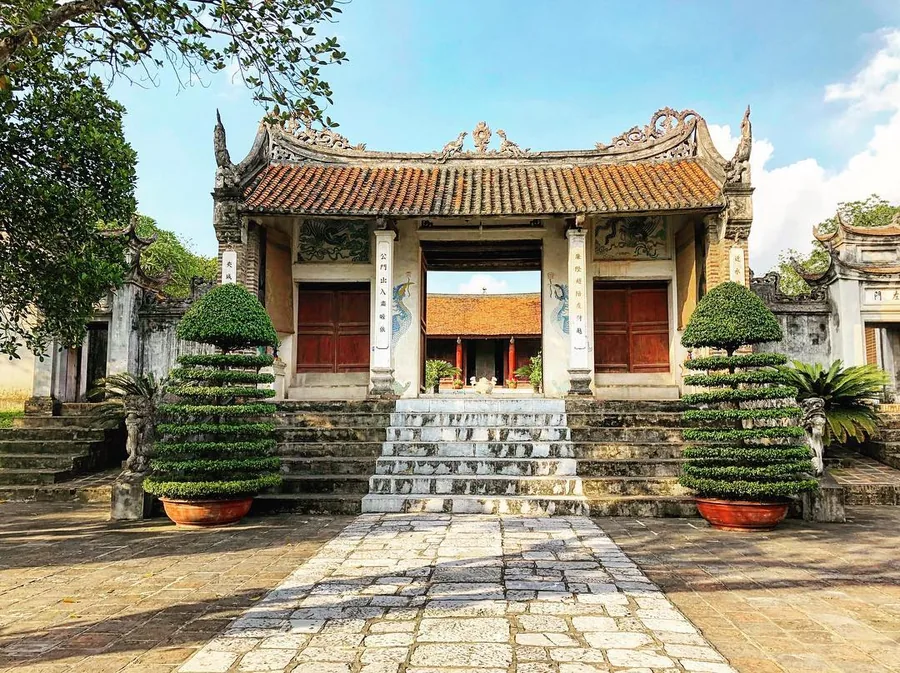
Co Loa is easier to understand when its visible temples are placed within the much larger earthen-citadel landscape. Start with available interpretation and a site map, then ask which surviving rampart sections can be viewed from permitted public routes. Earthworks may look like ordinary raised ground without that explanation. Compare the scale of the defences with what archaeological evidence reveals about settlement and early political organisation. Where displays include weapons or excavated material, read their labels rather than treating every object as proof of a legend. Stories associated with An Duong Vuong and the citadel are an important part of cultural memory, but legend and archaeological finding are different kinds of evidence. The living settlement and worship places also matter: this is not an empty archaeological park where every bank can be climbed. Choose a short, explained section and a relevant monument instead of attempting to trace an entire circuit on an unverified map. Follow conservation barriers, avoid digging or collecting material and ask before entering private land. Museum or exhibition access should be confirmed locally, since a thematic display mentioned in an older article may no longer be available. The experience adds historical depth to a Hanoi visit without duplicating Co Loa as a second physical heritage site.

Highlights

  • Begin with a site map and the introductory history of the citadel.
  • Ask which rampart remains can be viewed by permitted public access.
  • Compare earthworks with labelled archaeological evidence.
  • Distinguish legends associated with the site from excavated findings.
  • Include an open worship site without treating the inhabited settlement as unrestricted parkland.
  • Do not climb protected earthworks or collect archaeological material.
  • Ask before entering cultivated plots or residential space.
  • Respect worship and keep conservation access clear.
Perspective

Understand the experience

Why it matters

The visit connects early political history to actual landforms and archaeological evidence.

What makes it distinctive

A large earthen defence system survives within a lived landscape rather than as one compact stone monument.

What visitors often miss

A temple visit alone does not explain the scale of the citadel, and legend is not a substitute for archaeological interpretation.

The experience in a sentence

Walk selected sections of the citadel landscape and use museum or local interpretation to understand the scale and significance of the earthen fortifications.

Questions

Frequently asked questions

Will the walls look like a stone castle?

The fortifications are earthen. A map and explanation help identify surviving features.

Are the legends archaeological proof?

No. Legends are part of cultural memory and should be distinguished from excavated evidence.

Can I follow the complete rampart circuit?

No continuous visitor circuit is promised. Ask the manager which sections are open and appropriate.

Is a particular exhibition always available?

Not necessarily. Confirm current displays rather than relying on an older exhibition announcement.

Sources

Primary references

Continue exploring