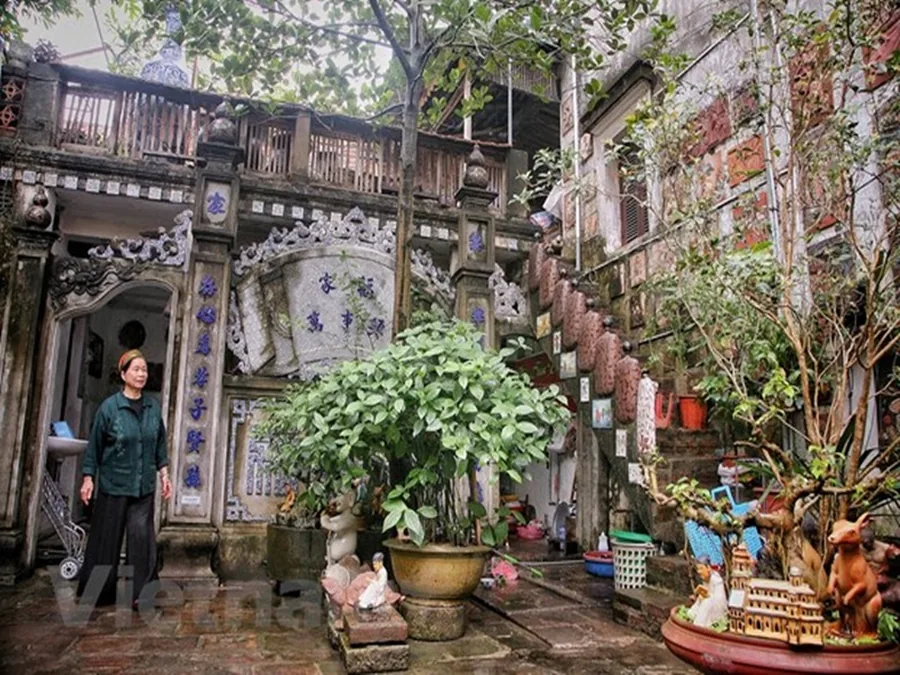
Read objects, architecture and living practice together.
The museum officially identifies itself as Bát Tràng Museum, short for Bảo tàng Nghệ thuật Hồn Đất Việt Bát Tràng (Bat Trang Museum of Viet Soul Art). Established on 28 January 2016 under Decision No. 444/QĐ-UBND of the Hanoi People's Committee, it is a non-public art museum rooted in Bát Tràng rather than a general municipal museum of the entire village. Its identity centers on the late People's Artisan Vũ Thắng: his ceramic works, his collection of historic Bát Tràng material and the creative practice continued by later generations through the museum and its atelier. This distinction matters because Bát Tràng also contains other ceramic visitor institutions. The museum should therefore be interpreted as an artist-, collection- and family-led institution embedded in a living craft village, not as a synonym for every Bát Tràng ceramic attraction.
Key things to understand
- Begin with the museum's identity as a Vũ Thắng-founded art museum rather than assuming it is a comprehensive museum of all Bát Tràng ceramics.
- Compare historic collected ceramics with Vũ Thắng's own works to see how tradition becomes a source for individual artistic invention.
- Look closely at vessel form, glaze, relief, carving and surface treatment instead of reading ceramics only through subject matter.
- Use the museum to understand how a living craft village can generate both inherited workshop knowledge and highly individual art practice.
- Notice the role of family stewardship: the museum explicitly presents later generations as continuing dialogue with Vũ Thắng's legacy.
- Treat the museum atelier as contemporary continuation, not as proof that every displayed historical object was produced there.
- Do not confuse this museum with the larger Centre for Vietnamese Craft Village Quintessence / ceramic museum complex elsewhere in Bát Tràng.
- Check current access to the memorial house because the museum states that deeper visits there require an appointment.
- Follow the museum's strict handling and photography rules because the gallery is small and objects are fragile.
- Combine the visit with the wider village only after understanding which experiences belong to this museum and which belong to other Bát Tràng institutions.